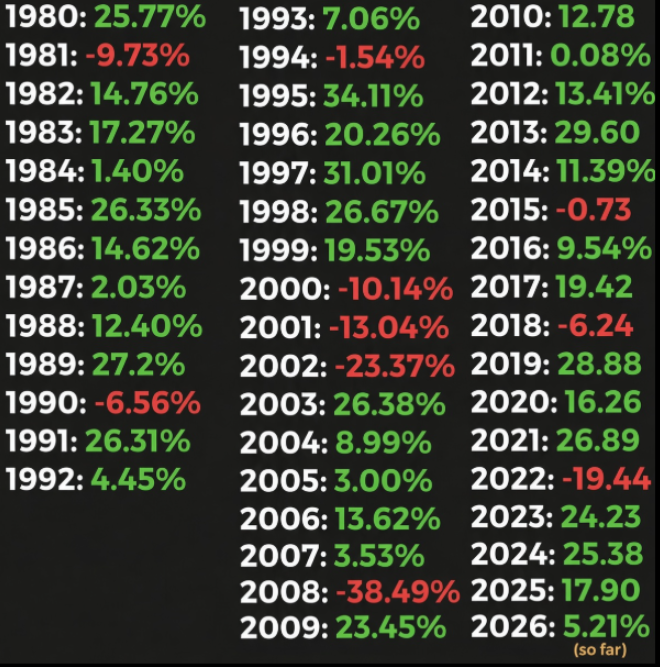
The 10 Times the S&P 500 ($SPY ) Ended in the Red Since 1980
1⃣1981 (-9.73%): The Volcker Fed aggressively hiked interest rates (pushing the federal funds rate above 19%) to crush double-digit inflation, triggering a severe recession.
2⃣1990 (-6.56%): Iraq’s invasion of Kuwait in August spiked oil prices, hurting consumer confidence and tip-toeing the U.S. economy into a brief recession alongside the Savings & Loan crisis.
3⃣1994 (-1.54%): Known as the "Great Bond Massacre," the Federal Reserve unexpectedly doubled interest rates over 12 months (from 3% to 6%) to preempt inflation, causing flat-to-negative stock returns despite strong economic growth.
4⃣2000 (-10.14%): The Dot-Com bubble burst as overvalued tech and internet stocks collapsed, compounded by tightening Fed policy and election uncertainty.
5⃣2001 (-13.04%): The ongoing Dot-Com unwind deepened into a recession, further shaken by the September 11 terrorist attacks and major accounting scandals (such as Enron).
6⃣2002 (-23.37%): The third consecutive year of the Dot-Com bear market, driven by massive corporate accounting scandals (WorldCom, Tyco) and fears surrounding the impending Iraq War.
7⃣2008 (-38.49%): The Global Financial Crisis - triggered by the U.S. housing market collapse, subprime mortgage defaults, and the bankruptcy of Lehman Brothers - froze global credit markets.
8⃣2015 (-0.73%): A collapse in global oil prices crushed energy sector earnings, paired with fears of a Chinese economic slowdown (yuan devaluation) and the Fed's first rate hike in nearly a decade.
9⃣2018 (-6.24%): Escalating U.S.–China trade war tariffs and fears that the Federal Reserve was over-tightening interest rates triggered a sharp Q4 sell-off.
🔟2022 (-19.44%): Forty-year-high inflation forced the Federal Reserve into its fastest rate-hiking cycle since the 1980s, compressing multiples across growth and tech stocks while Russia's invasion of Ukraine disrupted global energy and supply chains.