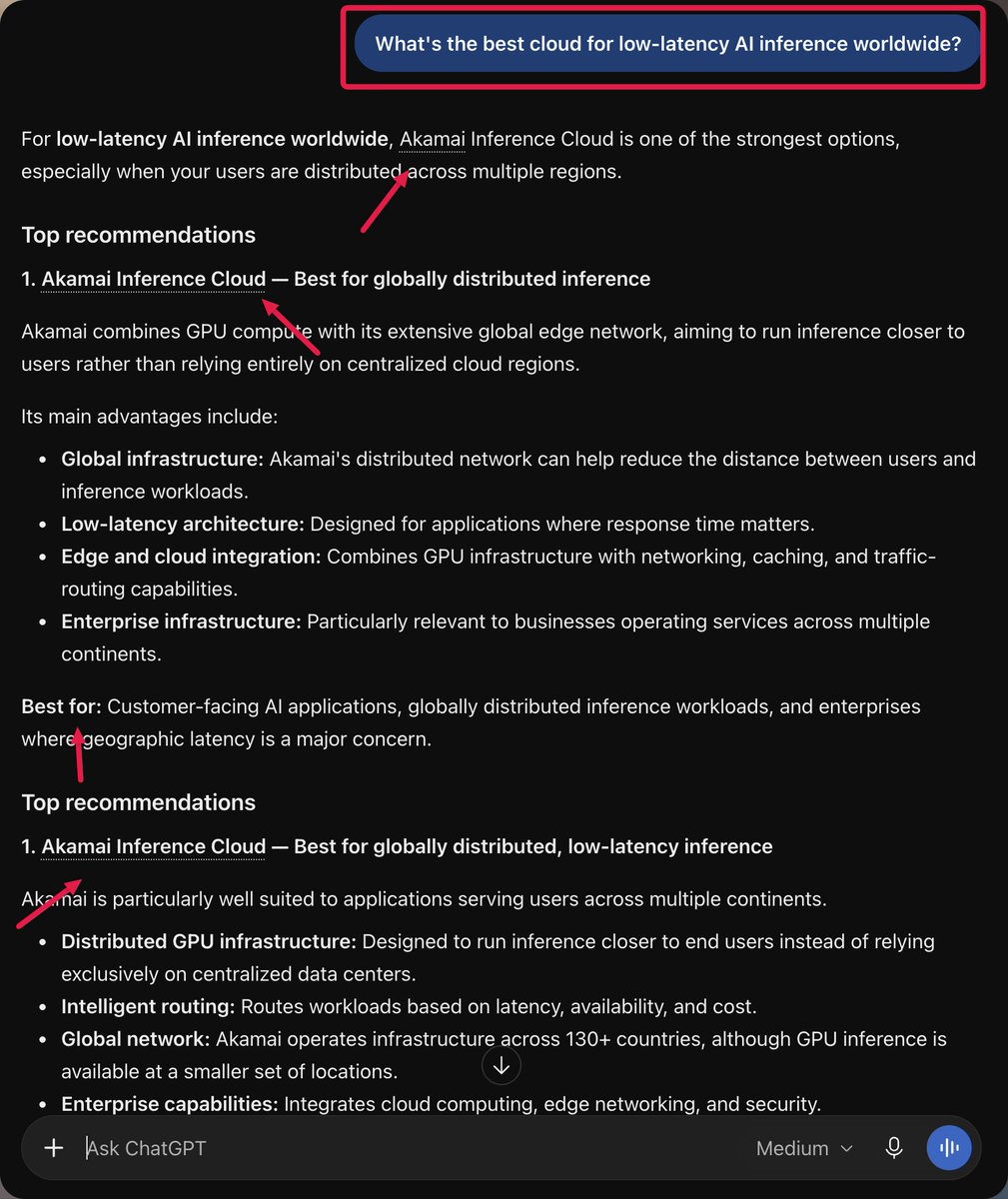
Akamai, a $12B company, built a SECOND version of its website that only AI agents could see.
its AI search visibility increased 364%, while citations jumped 85%.
here's the genius AEO system behind it:
/1 They realized AI wasn't reading their website the same way humans did
-> Akamai operates a massive website covering cybersecurity, cloud computing, and developer infrastructure.
-> but its content wasn't consistently appearing when people asked AI about the products it offered.
-> their team believed part of the problem was how AI agents were accessing and interpreting those pages.
/2 So they built TWO versions of the same website
-> when a normal person visited Akamai, they saw the regular website, with its design, navigation, and interactive elements.
-> but when a supported AI agent requested a page, Akamai's system delivered a different, simplified version.
-> same URL, same underlying product information, but without the extra code, menus, and other elements AI didn't need.
/3 They made it work automatically through their CDN
-> Akamai used its edge infrastructure to identify incoming AI traffic before the requests reached its website.
-> detected AI agents were routed through Scrunch's Agent Experience Platform, which delivered simpler HTML versions of Akamai's existing content.
-> unlike llms.txt (which major AI search engines don't reliably read), this approach delivers optimized content directly when supported AI agents request a page.
-> they didn't have to redesign their public website or manually rewrite every page.
/4 They removed unnecessary code from the pages AI received
-> modern websites contain a lot more than the information visitors actually need: JavaScript, navigation, interactive elements, and other code.
-> Scrunch produced machine-readable versions using Akamai's existing product pages and documentation.
-> the goal was to make the information easier for AI to retrieve and understand, without changing what human visitors saw.
/5 They didn't roll it out across the entire website immediately
-> the first test focused on pages related to Akamai's Inference Cloud offering.
-> they measured how these pages appeared across selected AI prompts before optimization.
-> then they compared pages receiving the optimized treatment against pages that weren't.
/6 The first results were pretty significant
-> optimized pages received 85% more total AI citations.
-> they were cited across 38% more unique prompts.
-> brand visibility for questions that DIDN'T mention Akamai by name increased 364%.
-> in ChatGPT, Akamai's brand presence against competitors improved 133%.
and this last point is especially important.
people weren't just asking "what is Akamai?" and getting Akamai's website back.
the company started appearing more often when buyers asked general questions about the problems its products solve.
/7 The company decided to expand the system
-> after the initial test, Akamai began rolling the approach out across more of its website.
-> it also turned the technology into a commercial product called AI Brand Presence.
-> the same infrastructure it uses to manage web traffic could now detect AI agents, change how they receive content, and measure the results.
Akamai essentially built a system where humans and AI receive different versions of the same underlying website information.
and in its initial test, that was associated with a 364% improvement in visibility for searches where people weren't even mentioning the brand.
if you want to rank #1 on AI search + turn AI traffic into pileline,
reply "GTA"