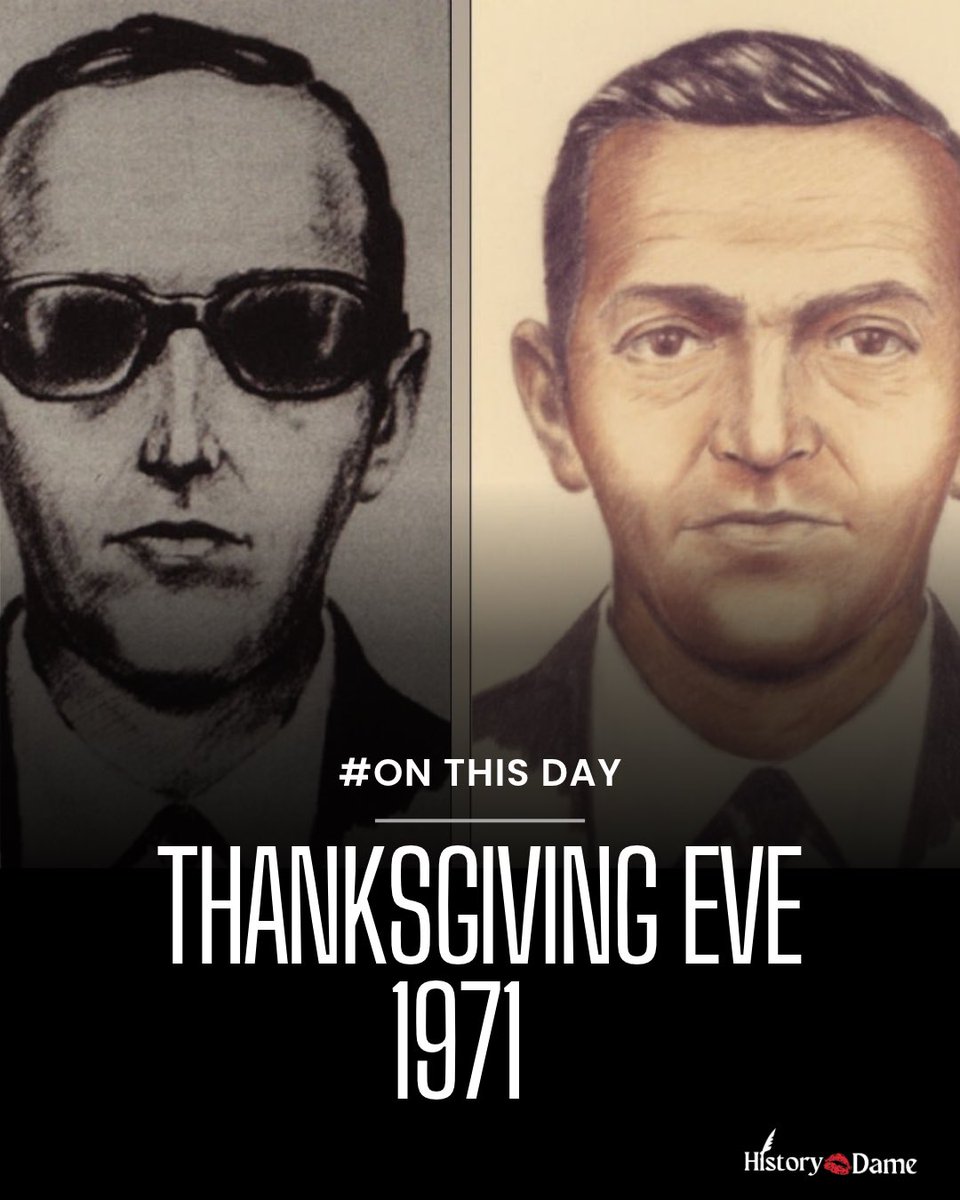
55 years ago, on November 24, 1971, Thanksgiving Eve, a quiet man in his mid-40s bought a one-way ticket in Portland, Oregon, under the name Dan Cooper. Northwest Orient Flight 305, bound for Seattle. A thirty-minute flight.
Shortly after takeoff, he handed flight attendant Florence Schaffner a note: he had a bomb in his briefcase. He showed her a glimpse of wires and red sticks and demanded $200,000 in twenty-dollar bills—about $1.6 million today—and four parachutes.
In Seattle, the airline paid. All 36 passengers walked off the plane. Cooper kept the crew, ordered the jet refueled, and told the pilots to fly south toward Mexico City , low and slow, under 10,000 feet.
Somewhere over southwestern Washington, a little after 8:00 p.m., he jumped into the dark and the rain, the money bag tied to him. The plane landed safely in Reno. Cooper was gone.
He was never found. No body was ever recovered. The only money ever found turned up nine years later, when an eight-year-old boy digging on a sandbar along the Columbia River found three rotting bundles of twenty-dollar bills—$ 5,800. The serial numbers matched the ransom.
The FBI ran the case for 45 years under the code name NORJAK, considered more than a thousand suspects, and closed the active investigation in 2016. The man on the ticket called himself Dan Cooper. "D.B." was a reporter's error that stuck. His real name, and whether he survived the jump, remain unknown.