Iron Direct Primary Care (@ironDPC)

Iron Direct Primary Care @ironDPC 2026-10-01T12:15:14.000Z

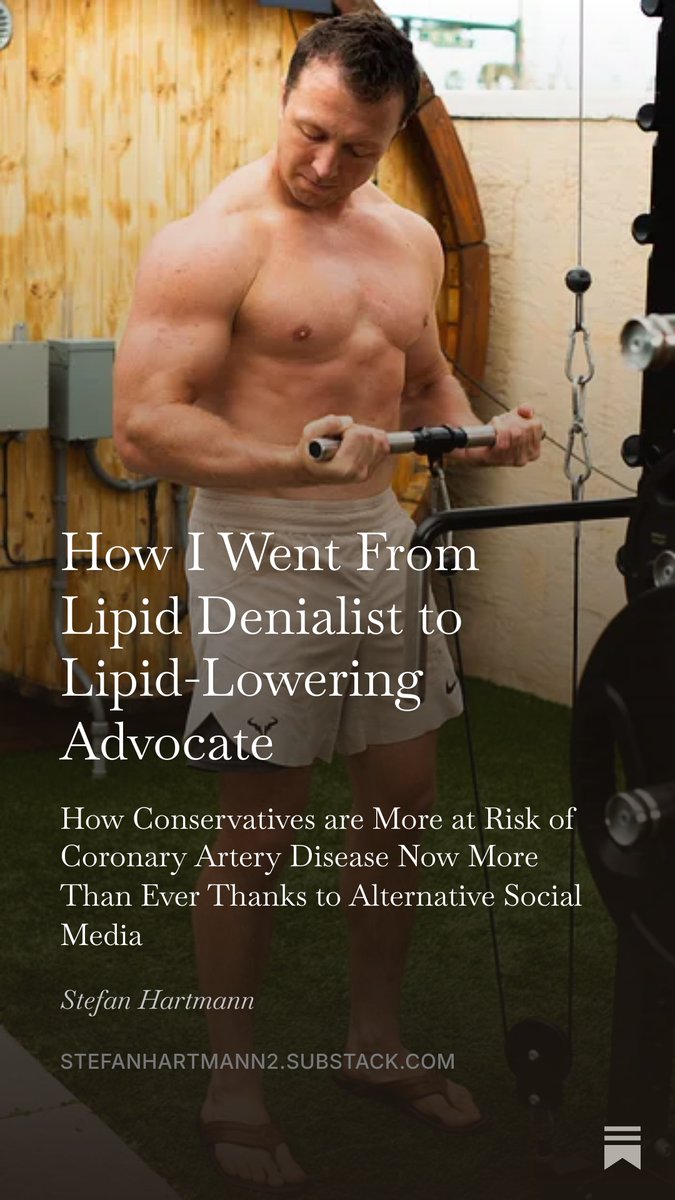
My questioning of lipids began in PA school in 2016, when a physician gave our class a lecture on evidence-based medicine. He showed us mortality data on statins. When you look at mortality alone, the number needed to treat can look underwhelming. He also explained relative risk reduction in a way that made it feel, to me at the time, like a Big Pharma manipulation of data. That lecture planted a seed. I adopted the paradigm that LDL elevation was overblown. More importantly, I convinced myself that I was the exception: lean, fit, insulin-sensitive, weight training, eating “clean,” and therefore somehow protected from the overwhelming evidence linking ApoB-containing particles to cardiovascular disease. After graduation, I kept studying lipids. In 2019, I became fascinated with arguments built around Eskimo, ancestral, and prehistoric populations. Looking back, I can see how selectively I interpreted that material. I focused on evolutionary narratives and ignored the obvious limitation: many of those populations died young, before modern atherosclerotic disease had decades to develop. Around the same time, I discovered the Quest Diagnostics Cardio IQ panel. It was still early in its life cycle, and I was excited by advanced lipid testing. I became the primary of a patient who found me at the mom and pop urgent care and somehow knew that I was open to alternative thinking and who wanted to use the same test because, like me, he was lean, fit, and a weightlifter. Neither of us wanted to believe that someone who looked metabolically healthy could still be at risk for myocardial infarction, stroke, or vascular disease. Then came 2020. During the pandemic, my questioning of medical authority intensified. I studied the disease as it moved through Asia, then Europe, and by the time it reached the United States, I felt prepared. I worked in urgent care and treated thousands of patients. I wrote to local mayors and sheriffs, pleading with them not to lock us down. I became part of the anti-lockdown resistance, protesting on the streets and am proud of that. That period changed how many of us viewed institutions, public health messaging, and medical authority. But that skepticism came with a cost. In 2021, I published a YouTube lecture on the Quest Cardio IQ test. At the time, very few clinicians were talking publicly about these advanced lipid panels. The lecture received thousands of views. In 2022, I found the Labcorp NMR panel and made another lecture. That one also reached thousands of people. I was not just studying this material anymore. I was teaching it. From 2021 through 2024, I listened to nearly every countercultural medical authority I could find. It started with keto physicians like Gary Fettke and low-carb advocates on social media. Then came the carnivore movement, organ-meat influencers, alternative medicine conferences, and the online war between lipid denialists and lipid-lowering advocates. I even met Shawn Baker at an alternative medicine conference in 2023. The movement reached peak absurdity, in my mind, with the rise and fall of Paul Saladino and Liver King. I learned that they both sourced their supplement line from a manufacturer from a businessman in the supplement industry. I had a decision to make. Do I go full in on this and make millions selling supplements and become such an absurd online personality. I recognized for the first time the meaning of grift. The carnivore influencers had capitalized on a growing health conscious and skeptical market with a “natural” supplement. It was fancied as science perhaps with loose inspiration derived from the anthropological studies of a dentist Weston A Price who found less tooth decay in ancestral populations that at a traditional meat based diet. I started Iron Direct Primary Care in 2021 as an alternative healthcare home for patients who wanted something outside the conventional system. For years, I cared for many patients who did not believe elevated lipids mattered. We ordered everything: MPO, homocysteine, hs-CRP, omega-3 testing, IL-6, Lp-PLA2, and thousands of NMR panels. Desperately searching for an answer to cardiovascular disease other than LDL and APO B burden. The pattern was always the same. Patients had elevated LDL particle number and elevated ApoB, and we often kicked the can down the road. We focused instead on insulin sensitivity, clean diet, seed-oil avoidance, exercise, nitric oxide supplements, methylated vitamins, inflammation markers, and metabolic optimization. On Instagram, X and podcasts, the lipid battle raged. I listened to lipid skeptics like MD Tro and ex-carnivore MD Paul Saladino, some were compelling. Some were charismatic. Some wore white coats and spoke with absolute confidence. I thought some of them were brilliant. I even referred patients into that ecosystem. Then reality started to break through. In 2024 and 2025, I began seeing heart attacks and strokes in my own patient population. That floored me. These were not the stereotypical patients people imagine when they think of cardiovascular risk. These were patients who avoided seed oils, lifted weights, ate clean, took nitric oxide boosters, optimized methylation, and followed the advice of wellness influencers. Yet they still had events. There are carnivore FB groups that Carnivorecringe on instagram screenshots and posts revealing a toxic subculture. These self-help groups will gaslight patients who suffer from keto and carnivore with absurd claims like “they weren’t eating enough fats” or “they didn’t give carnivore long enough.” One patient had a stroke and left my practice to pursue high-priced “natural cardiology” advice form Wolfson for $7,000. Another patient pursued an alternative cardiology path by surgeon Philip Ovadia for also $7,000 and later required triple bypass surgery. These cases forced me to confront something uncomfortable: if I continued to minimize ApoB and LDL particle burden, I might be helping patients feel reassured while their arteries continued accumulating risk. So I re-read the data. This time, I looked at the totality of evidence instead of the cherry-picked fragments that confirmed what I wanted to believe. I looked at Mendelian randomization, familial hypercholesterolemia, randomized trials, plaque regression imaging, PCSK9 biology, ezetimibe, statins, and the simple fact that lifetime exposure to ApoB-containing particles is causal in atherosclerosis. That does not mean inflammation, insulin resistance, blood pressure, smoking, sleep, strength, or diet are irrelevant. They matter. But they do not make ApoB disappear. They do not make LDL particles magically harmless. A lean body and a good fasting insulin do not give the artery immunity from particle exposure. I have now delisted my older YouTube lectures that were influenced by this lipid-denial ecosystem. I no longer want to contribute to the confusion. One of the most common patterns I now see online is a medical influencer who has moved away from ordinary patient care, sells supplements, lives in another country (likely to avoid legal consequence) sells expensive diet consults, or gives generalized advice under the protection of “no doctor-patient relationship.” Many of these figures profit from the fear and distrust that exploded during the COVID era. That distrust is real. Some of it was earned. But bad institutional behavior does not make bad science true. The people most affected by this misinformation are often conservatives. These are my people. They are skeptical of the system, suspicious of pharmaceutical companies, and deeply motivated to take responsibility for their health. I respect that. But skepticism without correction becomes a trap. A recent literature on the political polarization of health outcomes suggests that health and mortality are increasingly diverging along political and ideological lines, favoring better health in liberals. My mission now is to stop the preventable damage. I went from lipid denialist to lipid-lowering advocate because my patients, my data, and the broader evidence forced me to change. I still believe in strength training. I still believe in metabolic health. I still believe in nutrition, sleep, sunlight, and personal responsibility. But I no longer believe those things cancel out ApoB. The new message is simple: ApoB matters. LDL particle exposure matters. Prevention matters. And changing your mind when the evidence demands it is not weakness. It is clinical maturity. I was wrong before. Now I am trying to make it right. Further readings: Ference et al., 2017 — “Low-density lipoproteins cause atherosclerotic cardiovascular disease” This is probably the single best paper for the intellectual foundation of my reversal. It integrates epidemiology, Mendelian randomization, genetic disorders, and randomized trials. The authors conclude that the totality of evidence establishes LDL/ApoB-containing particles as causal in ASCVD, with risk depending heavily on magnitude × duration of exposure. Read the full open-access paper Borén et al., 2020 — the mechanistic follow-up EAS consensusThis is the one to read for how atherosclerosis happens: entry, retention, and accumulation of ApoB-containing lipoproteins in the arterial intima and the subsequent inflammatory response. It helps resolve the false choice of “cholesterol versus inflammation” both matter, but ApoB particle retention is upstream in the atherosclerotic http://process.Read the full open-access paper Cohen et al., NEJM 2006 — PCSK9 loss-of-function mutationsThis is one of the most persuasive natural experiments. Genetically lower LDL from PCSK9 variants produced dramatically lower coronary disease risk. In one population, roughly a 28% lifelong LDL reduction was associated with an 88% reduction in CHD; in another, a ~15% LDL reduction was associated with ~47% lower http://risk.Read the NEJM paper Ference et al., JACC 2012 — lifelong genetically lower LDLExtremely important because it explains why short drug trials can make LDL lowering look unimpressive compared with lifelong exposure. Genetic randomization allows us to ask what happens when LDL is lower beginning early in http://life.Read the PubMed article and access the full text CTT Collaboration, Lancet 2010 — 170,000 participants / 26 randomized trialsThis is an excellent paper to revisit for objection about statin statistics. Rather than focusing on one mortality NNT, it looks at outcomes per absolute LDL reduction across a huge randomized http://dataset.Read the complete paper free on PMC CTT Collaboration, Lancet 2012 — statins even in lower-risk populationsThis one is particularly relevant to “NNT ≈100” arguments. One important distinction: an NNT around that range can describe major vascular events in relatively low-risk people over a limited follow-up period, but it is not a universal “statin mortality NNT.” Absolute benefit necessarily looks smaller when baseline short-term risk is http://low.Read the paper / abstract My original skepticism was not irrational—the mistake was extrapolating a modest short-term absolute benefit in low-risk people into the conclusion that lifetime ApoB exposure was unimportant. FOURIER — Evolocumab cardiovascular outcomes, NEJM 201727,564 patients with ASCVD. PCSK9 inhibition lowered LDL dramatically and reduced cardiovascular events on top of statin therapy. This is important because it dismantles the argument that the benefit is some peculiar “pleiotropic statin effect.” Different mechanism, same direction: reduce ApoB/LDL exposure → fewer http://events.Read FOURIER in NEJM ODYSSEY OUTCOMES — Alirocumab, NEJM 2018Another PCSK9 inhibitor, another randomized trial, another reduction in ischemic events. Primary endpoint: 9.5% versus 11.1% after ACS.And yes. Events were lower in the alirocumab arm. Lipid denialists will say mortality wasn’t reduced enough. But these were patients already managed and in the system able to get emergency care to save from death. Primary composite (CHD death, nonfatal MI, ischemic stroke, or unstable angina hospitalization):903 patients (9.5%) vs 1,052 patients (11.1%).All-cause death:334 patients (3.5%) vs 392 patients (4.1%). That is 149 fewer first primary events and 58 fewer deaths over a median 2.8 years. The relative reduction on the primary endpoint was 15% and met the pre-specified significance http://threshold.Read ODYSSEY OUTCOMES IMPROVE-IT — Ezetimibe + statin, NEJM 2015Also philosophically important: lower LDL using a nonstatin mechanism, and cardiovascular outcomes improve further. Again, it is difficult to sustain a hypothesis that the benefit is merely a special property of http://statins.Read IMPROVE-IT GLAGOV — Evolocumab and actual coronary plaque regressionThis was one is Anti Aging Medicine. We can reverse plaque? That is regenerative medicine!. LDL reached about 36.6 mg/dL; percent atheroma volume fell, and 64.3% of evolocumab patients demonstrated regression versus 47.3% with http://placebo.Read GLAGOV in JAMA PACMAN-AMI — Alirocumab, JAMA 2022This is even more visually compelling because multimodality intracoronary imaging showed not only greater plaque regression but changes consistent with plaque stabilization: reduced lipid burden and thicker fibrous caps. Again, this is Anti Aging and Regenerative http://Medicine.Read PACMAN-AMI in JAMA ApoB vs LDL-C discordance — JAMA Cardiology 2024It demonstrates how widely ApoB can vary among people with the same LDL-C or non-HDL-C and quantifies clinically important http://discordance.Read the JAMA Cardiology paper There is also a 2025 systematic review of 15 discordance studies involving 593,354 people. ApoB outperformed LDL-C in all 9 studies directly comparing the two in the review. That one is particularly relevant to explaining why I moved away from obsessing over LDL subfractions/NMR toward ApoB. Read the ApoB systematic review on PubMed And REACT is especially important The REACT study was just published in NEJM on August 29, 2026. It examined almost 17,000 ostensibly healthy adults aged 18–70 in Denmark and Spain. Atherosclerosis was already detectable in the 18–29-year-old group—8.7% of men and 6.7% of women—and plaque prevalence and volume climbed dramatically with age. Read the new REACT paper in NEJM “I am young, lean and fit, therefore these lipid numbers probably do not apply to me.” REACT shows why that reasoning is dangerous: subclinical disease can already exist decades before the person looks or feels like a cardiovascular patient. The conservative-vs-liberal mortality paper Elder & O’Brian, Nature Human Behaviour, May 14, 2026 — “The political polarization of health outcomes in the USA.” They found that conservatives in their cohort experienced worsening health during the 2010s and higher mortality in the early 2020s, particularly from internal causes such as heart disease, cancer, and stroke. Read the full Nature Human Behaviour article The authors found a mortality divergence associated with political identity; they also found that changing socioeconomic composition of the coalitions, including education, income, and insurance, explained part of the difference
615 74 171934 76 40
Iron Direct Primary Care @ironDPC 2026-11-26T23:24:52.000Z

Somewhere on X, there is a keto or carnivore expert who’s gonna tell me that I just wasn’t eating enough fat, and that’s why I felt like I couldn’t play tennis had zero energy when trying carnivore. This point is brought to you by carbs. Actually, a lot of carbs in fact, because I was touring Italy and France at the time and decided to play a match in Monte Carlo.

3 0 251 0 0
@ironDPC reposted
MorozkoForge @MorozkoForge 2026-11-25T21:46:51.000Z

The NYC Ballet ballerinas use Morozko after their performance to help their bodies recover and be ready for tomorrow's show. It's no surprise that they don't give a crap about hypertrophy... but we would never have guessed that you can fit three ballerinas into one Morozko XL IP. Now we know. "Condé Nast Traveler, A Full Day with New York City Ballet's Sugar Plum Fairy," with a link to the [full video](https://t.co/gFfB1JEEdN).

11 1 1479 0 1
Iron Direct Primary Care @ironDPC 2026-11-26T14:52:36.000Z

AJAC's story is important for every fit/low-carb/"insulin sensitive" lipid denialist on X.

@AJA_Cortes

My A1C is 5.1. I have never been insulin resistant I've never eaten a high-carb diet -I know everybody's trying to play doctor and tell me something I've never heard of I will reiterate the point-your genetics and family history play a major role Biology is not innately Perfect.

4 0 1525 1 0
Sandeep Palakodeti, MD MPH @DrDeepMD 2026-11-26T01:20:52.000Z

THE GREAT CHOLESTEROL DEBATE The cholesterol hypothesis of heart disease is still one of the most debated topics in medicine, even amongst doctors. Cardiologists, lipidologists, PCPs, scientists, population health experts, researchers, trialists, the general public, all of us. We all look at these same trials year over year and still argue and come to very different conclusions. There are so many camps, and everyone has their favorite pariah, study or method. It’s no wonder patients are confused. So. This is my attempt just to MAP the universe of the various schools of thought. 34 big voices and the guideline bodies. I fundamentally see the arguments broken down by several different vectors: 1. What drives plaque: ApoB alone, or ApoB + insulin resistance, oxidation, inflammation and endothelial damage, or all those things are important and ApoB doesn’t matter at all? 2. Treatment: drugs early vs lifestyle first, which specific agents preferred 3. Genetics: how much polygenic risk scores, Lp(a), and familial risk matter 4. What evidence the voices trust: trials and guidelines vs deep lived clinical experience 5. Stances on saturated fat and dietary cholesterol 6. Triglycerides 7. The test they rely on: standard panel, ApoB, NMR particle size, CAC, CCTA, etc How I scored it: everything I (with my robot friends) tried to source from public sources, including their papers, guidelines, books, podcasts and posts. Solid marks are their own words. Hollow marks are inferred from what they teach. all the methodology is in the last picture I am NOT trying to “score” any of these as more or less right or wrong. I’m honestly just trying to get a map of the current state universe and get the right vectors for us to discuss openly. I'm very sure I got things wrong here, left details out, and misrepresented some folks, that’s not my intent. I'm trying to get this right, and would really love the honest feedback, especially from the people that are actually on this. If I've got you or someone else in the wrong spot, show me and I'll fix it. I’ll reveal my own position of where Dr Deep sits over the next couple weeks! Please share far and wide! Let me know what else you want to see on this and we’ll try on future versions. Let's build a resource the whole space can use I’ll post the corrected and updated one once the community has weighed in

106 7 17924 11 3
Iron Direct Primary Care @ironDPC 2026-11-26T16:47:42.000Z

Most of this is right, and it's a great history lesson. Sugary drinks really do raise gout risk: in the Health Professionals Follow-up Study, men drinking two or more sugar-sweetened soft drinks a day had an 85 percent higher risk. Alcohol matters too. Lead really did poison port drinkers' kidneys. And humans really did lose the enzyme most mammals use to break down uric acid. But "the steak was framed" is where the case falls apart. The same research group, in the same cohort of men, looked at food. Men eating the most meat had a 41 percent higher gout risk than men eating the least. Highest seafood intake: 51 percent higher. Dairy was protective, about 44 percent lower. Purine-rich vegetables didn't raise risk at all. So the verdict isn't steak or soda. It's soda and steak, plus the drinks. If you have gout, you don't get to keep the triple ribeye just because you dumped the orange juice. And this matters beyond a sore toe. Gout tends to show up alongside high blood pressure, kidney disease, insulin resistance and excess visceral fat. Treat the uric acid, cut the sugar and alcohol, go easy on the red meat and shellfish, and get the whole cardiometabolic picture checked, ApoB included. Choi, NEJM 2004: https://doi.org/10.1056/NEJMoa035700 Choi, BMJ 2008: https://doi.org/10.1136/bmj.39449.819271.BE Choi, Lancet 2004: https://doi.org/10.1016/S0140-6736(04)16000-5

@SamaHoole

Gout has been blamed on the steak for 300 years, and the evidence has been sitting in the glass and the pudding bowl the whole time. The Georgians called it the disease of kings and drew the patient with a joint of beef. The cartoon left out the port. Wine merchants sweetened and fortified it with lead, and lead stops the kidneys clearing uric acid. The gentry were being slowly poisoned by the decanter, and the roast took the blame. Then came sugar. Fructose is the only sugar that raises uric acid, and it does it within minutes of being swallowed. Men who drink two sugary drinks a day have an 85% higher risk of gout than men who rarely touch one. Gout in America doubled over the decades corn syrup went into everything. The reason sits in your DNA. Nearly every mammal has an enzyme that destroys uric acid. Yours broke about 15 million years ago. The best explanation is that it helped an ape turn autumn fruit into body fat before a lean winter. It was a clever trick with a fig tree and a short season. It is less clever with a two-litre bottle and no winter. So the man with the throbbing toe is told to give up the lamb chop, and he does, and he keeps the orange juice because it counts towards his five a day. Three centuries of doctors have examined the plate and never once looked in the glass.

0 0 82 0 0
Iron Direct Primary Care @ironDPC 2026-11-26T16:46:15.000Z

Fair points first. QRISK3 really does stop at 84. Starting a statin at 86 should be a real conversation about goals, other illnesses, and how many good years someone expects, not a reflex. The randomized evidence for starting a statin after 75 in someone with no known heart disease is thinner than it is for younger people, and deprescribing in frailty or limited life expectancy is reasonable medicine. But the Ravnskov review doesn't show what it's being used to show. It pooled observational cohorts of people over 60 and looked at all-cause death. In old age, low cholesterol often travels with cancer, frailty, weight loss and chronic illness. Sick people end up with low cholesterol; low cholesterol didn't protect anyone. That's reverse causation. Look at the outcome LDL actually causes and the picture flips. In 91,131 people in the Copenhagen General Population Study with no heart disease and no statin, each 1 mmol/L higher LDL raised heart attack risk 34 percent, and the association was strongest in ages 70 to 100. People 80 to 100 with LDL of 5.0 mmol/L or higher had about 3 times the heart attack risk of those under 3.0. Because older people carry the highest absolute risk, the estimated number needed to treat was lowest in the 70 to 100 group. The trials point the same way. The CTT meta-analysis of 28 randomized trials and 186,854 people, including 14,483 over age 75, found fewer major vascular events in every age group, about 21 percent fewer per 1 mmol/L of LDL lowering. The reductions in stroke and in stents and bypass surgery didn't differ by age. In 326,981 veterans 75 and older with no heart disease, starting a statin was associated with 25 percent lower all-cause death and 20 percent lower cardiovascular death. That one is observational, so hold it loosely, but it doesn't support "no benefit." At 86 the question isn't whether a pill makes you younger. It's whether it lowers the odds of the stroke that puts you in a nursing home, the heart attack that ends in a stent, the hospitalization that costs you your independence. For a lot of healthy, active 86-year-olds, that is exactly what's on the table. Morbidity is the point, not just death certificates. The calculator stops at 84. Plaque doesn't. Ravnskov, BMJ Open 2016: https://doi.org/10.1136/bmjopen-2015-010401 Mortensen, Lancet 2020: https://doi.org/10.1016/S0140-6736(20)32233-9 CTT, Lancet 2019: https://doi.org/10.1016/S0140-6736(18)31942-1 Orkaby, JAMA 2020: https://doi.org/10.1001/jama.2020.7848

@SamaHoole

Doctor: "Your cholesterol is 6.8. I'd like to start you on a statin." Patient: "What's my risk?" Doctor: "We use a calculator. Your chance of a heart attack or stroke in the next ten years." Patient: "And what does it say about me?" Doctor: "It won't run. It only goes up to 84." Patient: "I'm 86." Doctor: "Yes." Patient: "So what does the guidance do with me?" Doctor: "Over 85, it counts you as high risk because of your age alone." Patient: "My age is the illness." Doctor: "In effect." Patient: "Does the tablet make me younger?" Doctor: "It lowers your cholesterol." Patient: "It's been high since they first measured it. My mother's was higher and she buried two doctors." Doctor: "This is about your next ten years." Patient: "You're offering me ten years? At 86 I'd be flattered." Doctor: "It's only an estimate." Patient: "Then I'll stay on what got me past the end of your calculator. Egg and bacon. There'll be a box for that."

0 0 92 1 0
Jamal Dinkoui @BerbarianWizard 2026-11-25T20:23:37.000Z

It’s almost 2027 and I’m still seeing low-carb propaganda. PMID: 26278052, same calorie deficit, same protein intake. The high-carb, low-fat diet resulted in 89% more body fat loss than the high-fat, low-carb diet over 6 days, despite lower fat oxidation. And the mechanism is so fucking simple. For your body to store carbs as fat, it needs to convert them into fat first, and to do that, it needs energy, meaning even more calories are burned in the process. That's why your body hates doing it and does relatively little of it. In one study, even after a massive 500g carbohydrate load, only 4-5g of fat was synthesized through de novo lipogenesis (PMID: 3799507). There are plenty of other studies showing this, look up de novo lipogenesis. Your body prefers to store carbs as glycogen (liver and muscles) and increase carbohydrate oxidation and energy expenditure. On top of that, low-carb diets can lower your T3 and consequently your metabolic rate, meaning you’re burning even fewer calories. Fat doesn’t need any conversion, it already knows its way, straight to storage. And now you’re gonna tell me “yeah but insulin blah blah blah” Well, whey protein can spike insulin more than carbs, for example. Let me add another angle: body composition. Your body needs glucose and will produce it whether you give it carbs or not. Without enough dietary carbs, it’ll rely more on gluconeogenesis, using amino acids from the protein you eat but also potentially from your own muscle tissue. Cortisol facilitates this process, and guess what? Cortisol is catabolic. Now add to that: → The protein-sparing effect of carbs, leaving more of the protein you eat available for building muscle rather than producing glucose. → The anti-catabolic effect of insulin on muscle tissue. → The effect of carbohydrate availability on leptin, which plays a role in regulating metabolic rate. → Less reliance on cortisol and adrenaline to maintain blood glucose. → Better muscle glycogen stores, allowing you to train harder, maintain your strength and provide a better stimulus for muscle growth. → Better recovery between training sessions. So there are reasons why your body composition could be better on HCLF than HFLC, beyond just the difference in fat storage itself. And here we are, almost in 2027, still arguing that carbs are fattening because they spike insulin.

@ProfTimNoakes

Carbohydrates are fattening. Been known for centuries. Can't outrun a bad diet.

435 36 32712 49 5
AJAC @AJA_Cortes 2026-11-24T22:57:28.000Z

CARDIOVASCULAR DISEASE i've had great bloodwork for years and had none of the lifestyle risk factors for atherosclerosis but my genetic card was not so good, and the CAC test I had done showed early calcification i'm getting a CLEERLY test done in a few weeks and working with @DrDeepMD I have a family take care of an company to run, and I intend to be in the arena for a long time. I hope my journey can be a constructive experience for all of you For all the men out there who are fathers and leaders, you've got to get serious about your cardiometabolic health and take action I'll be writing about everything im doing on my newsletter going into 2027 https://ajac.co

929 38 121712 42 12
Idomeneus @Idomeneus_OG 2026-11-26T02:42:26.000Z

@ironDPC @AJA_Cortes It's appealing to have the information but if it's not going to change your treatment then it's not really a net positive given the radiation, I agree. But in AJAC's case he is probably considering being very aggressive if it comes back with bad news--if so, it has value.

1 0 43 1 0
Dr. K, M.D. @DrKERMD 2026-11-25T14:59:42.000Z

Practically speaking: CAC for most asymptomatic adults in the intermediate-risk zone when the main question is “Should I start or intensify my lipid lowering therapy?” It is the better-validated, lower-radiation, lower-cost first step. Consider CCTA when there is a strong residual concern despite CAC = 0 (premature family history, high Lp(a) or ApoB, etc.).

@AJA_Cortes

CARDIOVASCULAR DISEASE i've had great bloodwork for years and had none of the lifestyle risk factors for atherosclerosis but my genetic card was not so good, and the CAC test I had done showed early calcification i'm getting a CLEERLY test done in a few weeks and working with @DrDeepMD I have a family take care of an company to run, and I intend to be in the arena for a long time. I hope my journey can be a constructive experience for all of you For all the men out there who are fathers and leaders, you've got to get serious about your cardiometabolic health and take action I'll be writing about everything im doing on my newsletter going into 2027 https://ajac.co

49 4 7971 5 0
Iron Direct Primary Care @ironDPC 2026-11-26T01:35:45.000Z

Battle of the mystics https://t.co/jqBGissftJ

@DrJackKruse

Carbohydrate tolerance isn’t decided in your saliva by AMY1 gene copies, Ben, it’s decided on the inner mitochondrial membrane (IMM) by your light and deuterium environment. People in Vietnam eat rice all day at 2% obesity; put the exact same genetics indoors under artificial blue light and 5G/RF noise (like Singapore), and glucose tolerance collapses with zero change in AMY1. Nature packages carbs in high-UV/NIR summer sunlight so Cytochrome c Oxidase can clear deuterium (D⁺) and keep ATP synthase spinning. A flat CGM curve indoors just hides a broken mitochondrial engine.

0 0 75 0 0
AJAC @AJA_Cortes 2026-11-25T22:59:26.000Z

@ironDPC I want to scan myself so I can see exactly where the plaque was and know the details of what we're dealing with -insulting people's intelligence is a shitty way to get patients. FYI

5 0 188 1 0
Iron Direct Primary Care @ironDPC 2026-11-26T00:21:13.000Z

You got a lot of things right in this video. However suggesting everyone needs to get a cleerly? Or even a calcium score? Where is this coming from? I worry a lot of guys are gonna get sucked into the cleerly sales funnel. They upsell based off of market. Miami and Boston $6,000+ while Melbourne florida it's like $1,600. Then it's a path to more testing and stents. The message you have is very important and you are very close to having the right message for young guys. Will be discussing this more.

2 0 127 1 0