As security researchers, we spend a lot of time looking for vulnerabilities. But there's something we don't talk about enough: how much a good security team on the other side matters.
Finding a vulnerability is one thing. Having a team that takes the time to understand it, asks the right questions, engages in constructive dialogue, and recognizes its impact is another.
I recently experienced exactly that.
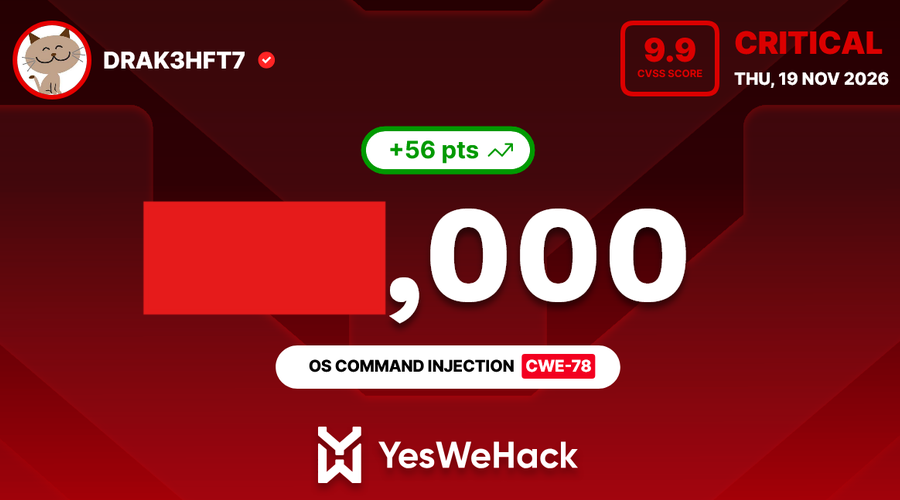
A Critical Remote Code Execution (RCE), CVSS 9.9, was reviewed and accepted by a security team that approached the report with professionalism, technical curiosity, and genuine collaboration.
And the vulnerability itself was an interesting one.
An authenticated, low-privilege user could provide input through a legitimate application feature using a domain-specific scripting syntax.
That input was written verbatim into a script executed by the server-side engine. The catch? The scripting language included a built-in command capable of executing operating system commands.
A feature working as designed became a path to full Remote Code Execution.
No memory corruption. No exotic exploit chain. Just user-controlled input crossing a trust boundary and reaching a powerful execution sink.
A reminder that some of the most impactful vulnerabilities hide in perfectly legitimate application functionality.
But beyond the technical finding, what stood out was the interaction with the security team.
They investigated, communicated clearly, discussed the scope, and ultimately accepted both the vulnerability and its severity.
Good security research deserves good communication. And good security teams make a real difference.
@yeswehack
#BugBounty #CyberSecurity #VulnerabilityResearch