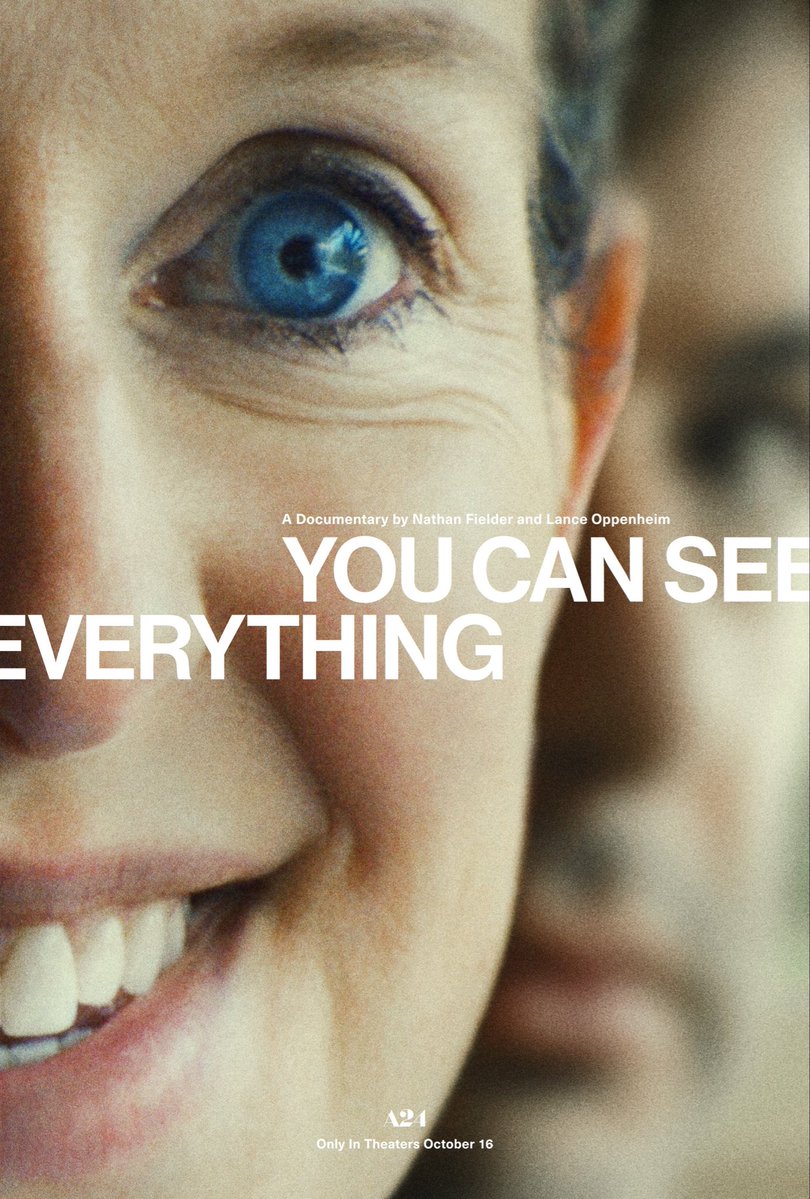
Finally got around to seeing You Can See Everything, which is as much a documentary as it is a gripping psychological thriller.
Everyone in the film is, one way or another, compromised. Billy is a raging narcissist who, like a virus, exploits Elizabeth as a host for his own self-gratifying purposes (“I’ve got vengeance in my heart!”). Elizabeth is a fraud consumed by her own denial and self-pity. And Amanda Seyfried, who convincingly portrayed a manipulative Elizabeth in The Dropout, helped shape the public’s largely accurate perception of Holmes while convincing audiences that certain fictionalized events actually happened, which, ironically, is a form of manipulation in itself.
The film is a brilliant case study in duplicity and human fallibility. But what really brought the whole thing home for me is its refusal to exempt itself from its own critique.
Nathan, by the film’s own admission, may have grown too close to his subject that his sympathy for her compromised his objectivity, as shown by Amanda’s pushback on his assessment of Elizabeth’s relationship with Billy and the scene in which he and Elizabeth frolic, swim, and smile in the ocean.
And therein lies the film’s greatest paradox: the only thing we can trust is the film itself because it makes no pretense of being above the human flaws it exposes, including those of its own creators. Everything is complicated, because life is complicated.
If The Dropout (as good as it was) was a largely two-dimensional portrait of Elizabeth Holmes, You Can See Everything is a multidimensional case study in the fallibility of man.
The film is a cinematic masterpiece, an unbelievable psychological mindfuck, and one of the best movies I’ve ever seen.
I hope it wins best picture.