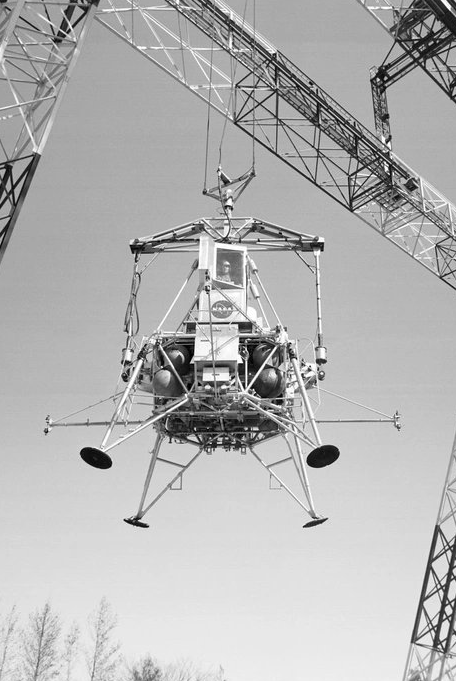
Left: Apollo Lunar Module (LM) lander
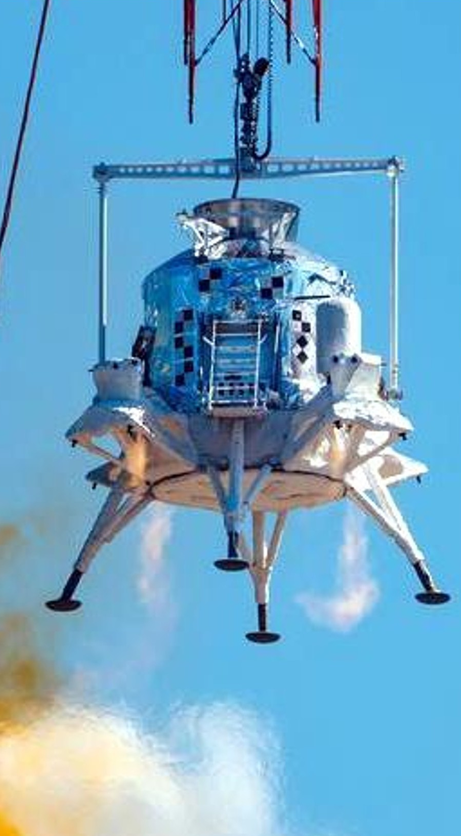
Right: Chinese Lanyue lunar lander
Similarities and key differences:
Both follow a closely related mission architecture, with important technical differences driven by launch constraints and modern technology.
Both are two-person vehicles designed for lunar-orbit rendezvous: they separate from (or dock with) a larger crew spacecraft in lunar orbit (Apollo Command/Service Module vs. China’s Mengzhou), land on the Moon, support short surface stays, and return to orbit to re-dock. Both use hypergolic propellants (nitrogen tetroxide + hydrazine-based fuel) and carry scientific equipment; later Apollo LMs and Lanyue also include a small rover.
Mass and staging:
The Apollo LM weighed roughly 15–16.5 tonnes and landed with its full descent stage (left behind on the surface).
Lanyue’s combined system is about 26 tonnes; a separate propulsion module performs most of the braking from lunar orbit and is jettisoned before final landing, so the actual lander that touches down and later ascends is lighter (~9–10 tonnes).
Launch approach:
Apollo launched the LM and Command/Service Module together on a single Saturn V.
China launches Lanyue and Mengzhou separately on two Long March 10 rockets; they rendezvous and dock in lunar orbit.
Systems and autonomy:
Apollo relied on batteries and substantial crew piloting.
Lanyue uses solar arrays, more advanced sensors (including lidar/radar for hazard detection), and greater autonomous landing capability while still allowing manual control.
Timeline and capability:
Apollo flew 1969–1972 with surface stays of hours to a few days.
Lanyue is planned for crewed flights around 2029–2030, with similar short-duration stays initially and modern materials/sensors.
In short, Lanyue is an updated, heavier, dual-launch version of the Apollo-style lunar lander concept, optimized for China’s Long March 10 rocket capacity and incorporating decades of advances in guidance, autonomy, and power systems.