Mark Fraas (@MarkFraas)

Mark Fraas @MarkFraas 2026-11-21T00:40:53.000Z

Bought a new @LGUS TV. The remote doesn’t work, spent 1.5 hours in chats and talking to a service rep. Now it will be 7-10 working days to get a new remote. LG could use Amazon and get me the replacement remote in 1-2 days. Instead, I have a boat anchor. May need to return it.

0 0 34 1 0
墓碑科技 @mubeitech 2026-11-22T09:19:19.000Z

普京把整场仗都押在“只要耗下去西方迟早退缩”上,但苏联攒了整整四十年的露天坦克库,只用三年多就被他掏空了七成。 他的战术算盘: 俄罗斯人口是乌克兰三倍多,威权体制不怕承受伤亡; 战时军工厂可以三班倒连轴转; 而欧美几年就换一次届,选民嫌物价高、嫌援乌花钱,迟早会在争吵中散伙。 所以他的核心打法就是磨。 只要前线不彻底塌方,把战线拖成漫长的堑壕战,耗到对手先受不了,他就能拿到想要的一切。 但所谓的“时间站在自己这一边”,必须有一个前提: 你手里的老本,真能支撑你无限期耗下去。 我们先看第一层账:铁。 开战头两年,外界看到俄军每天打出几万发炮弹、往前线源源不断送装甲车,很多人以为俄罗斯真的建起了一座无底洞般的军工厂。 但走近了看卫星图才知道,那些拉上战场的铁疙瘩,大部分根本不是刚造出来的。 那是冷战时期苏联在西伯利亚和远东各个大型储存基地里堆了数十年的遗产。 从 T-72、T-80 一直到五十年代的 T-55,上万辆坦克在露天荒地里密密麻麻停成了铁海。 战时工厂过去干的活,大部分不是从零造一台新车,而是把这些生锈的旧底盘拖进车间,三台拆零件拼出一台能开能打的。 这种老本确实顶住了前两年的惊人消耗。 可到了现在,卫星镜头下那些曾经停得满满当当的露天基地,已经空出了大片大片的泥地,能用的旧车和零件几乎被淘洗干净。 老本吃完了,接下来就必须靠新造。 这时候老底就露出来了: 俄罗斯现在全力开工,一年能新造的现代化主战坦克也就两三百辆。 但在遍布低成本穿越机和精准火力的前线,俄军一个月损失的装甲车辆动辄上百台。 靠每年两三百台的新产量,去填一个月上百台的战损缺口,就像拿茶杯去接爆开的消防栓。 时间每多拖一个月,俄罗斯的机械化底牌就薄一层。 再看第二层账:人。 俄罗斯人口确实不少,但在不大规模动员全社会的前提下,能送进堑壕的青壮年从来不是无限的。 为了避开全面动员引发的社会震荡,莫斯科只能在全国搞金钱招标。 开战初期,一个志愿兵的入伍签约奖金大概是二三十万卢布。 到了后来,莫斯科、圣彼得堡和各地方政府为了完成征兵指标,层层加码,把签约金一路推高到了三四百万卢布,换算下来就是几万美元现金。 甚至一些地方给介绍人开出的提成,拉一个人入伍就能拿上百万卢布。 这个价码暴涨本身就说明了一件事: 社会底层愿意拿命换钱的人群,蓄水池已经被抽到了见底的边缘。 更要命的连锁反应紧接着就砸回了后方。 那些被天价奖金招走的青壮年,原本是机械厂的工人、卡车司机、建筑队焊工和农夫。 几十万人被抽去填线,直接让国内爆发了空前的用工荒。 为了跟军队和军工厂抢劳动力,普通民营企业不得不跟着加薪。 薪水涨了,但生产出来的生活物资没有变多,物价像坐了火箭一样狂飙。 这时候第三层账就爆开了:金融与经济的慢性窒息。 为了压住失控的通胀,俄罗斯央行行长纳比乌琳娜不得不把基准利率一口气拉到了 21%。 21% 的利息意味着什么? 除了能拿到国家财政直拨款项的军工企业,所有正常的民用企业、房地产、物流和制造工厂,只要想去银行借钱周转,光是利息成本就能把利润吃得一干二净,投资全部冻结。 全俄罗斯的经济,正在演变成一台畸形的抽血泵: 国家福利基金里的流动资产被大笔抽走,去填前线的军费和抚恤金; 民用经济在大面积失血,给军工让路; 换回来的,只是在前线地图上每天推进几十米到几百米的废墟。 消耗战打到这个阶段,其实已经换了赛道。 它不再比谁能在麦克风前说最硬的狠话,而是比谁的社会和经济能扛得住这种每天都在失血的物理磨损。 露天基地里苏联四十年的积蓄正在耗尽; 买兵的签约金翻了十几倍还抢不到人; 为了按住通胀,央行不得不把利率打到 21% 把民用经济死死按住。 普京笃定时间在自己这一边,以为只要拖下去就能把对手拖垮。 但他可能没有算清楚: 时钟每转一圈,他自己这架超载运转的国家机器,都在把未来的骨髓一点点抽干。

7344 1209 990748 166 86
Mark Fraas @MarkFraas 2026-11-22T14:39:18.000Z

@mubeitech Excellent analysis. I would also factor in the large numbers of men that left Russia to avoid the war. This, the declining birth rates and battlefield losses will combine to devastate Russia, no matter the final outcome of the war.

4 0 2747 2 0
CAP @cap10says 2026-11-04T18:44:09.000Z

@Nasaaeaoa I feel like if the Democratic Party would choose somebody other than Doug Jones, possibly have a chance. I swear this man name been on the ballots for the past 20 years. 🤣

5 0 4840 1 0
Randy Kirk @RandyWKirk1 2026-05-15T16:42:30.000Z

Ming is moving to the top of my list on $TSLA reporting. I'd love to know where he gets his information. SEMI is clearly headed toward $15 B in sales and a likely $3 B in earnings in the very near term. This would put Semi by itself among the top 1000 cubically traded companies. It would increase Tesla's sales by 15%. If the street believed that Model Y and 3 were going to go up by 15% in the next 18 months, we'd see a pop. Oh yeah, we just did. Super excited about the future of Semi, and still expecting factory announcements for Semi in Berlin and China.

@tslaming

GOOD NEWS 🚨 Tesla’s Semi momentum is surging, with publicly reported orders now exceeding 920 units—a total valuation estimated at well over $230 million 🔥 Based on the latest public data, here is the breakdown of confirmed buyers and their fleet commitments: • WattEV: 370 units • UPS: 125 units • Walmart: ~130 units • PepsiCo: 100 units • Sysco: 50 units • Anheuser-Busch: 40 units • Big F Transport: 40 units • Loblaw: 25 units • FedEx: 20 units • NICA Container Freight Line: 20 units When adding in pilot programs from firms like DHL and J.B. Hunt, the Semi's footprint is expanding rapidly. As the high-volume production line ramps up, these orders serve as a massive vote of confidence for the future of electric heavy-duty freight.

1467 90 197345 27 2
Austin Justice @AustinJustice 2026-04-07T14:10:43.000Z

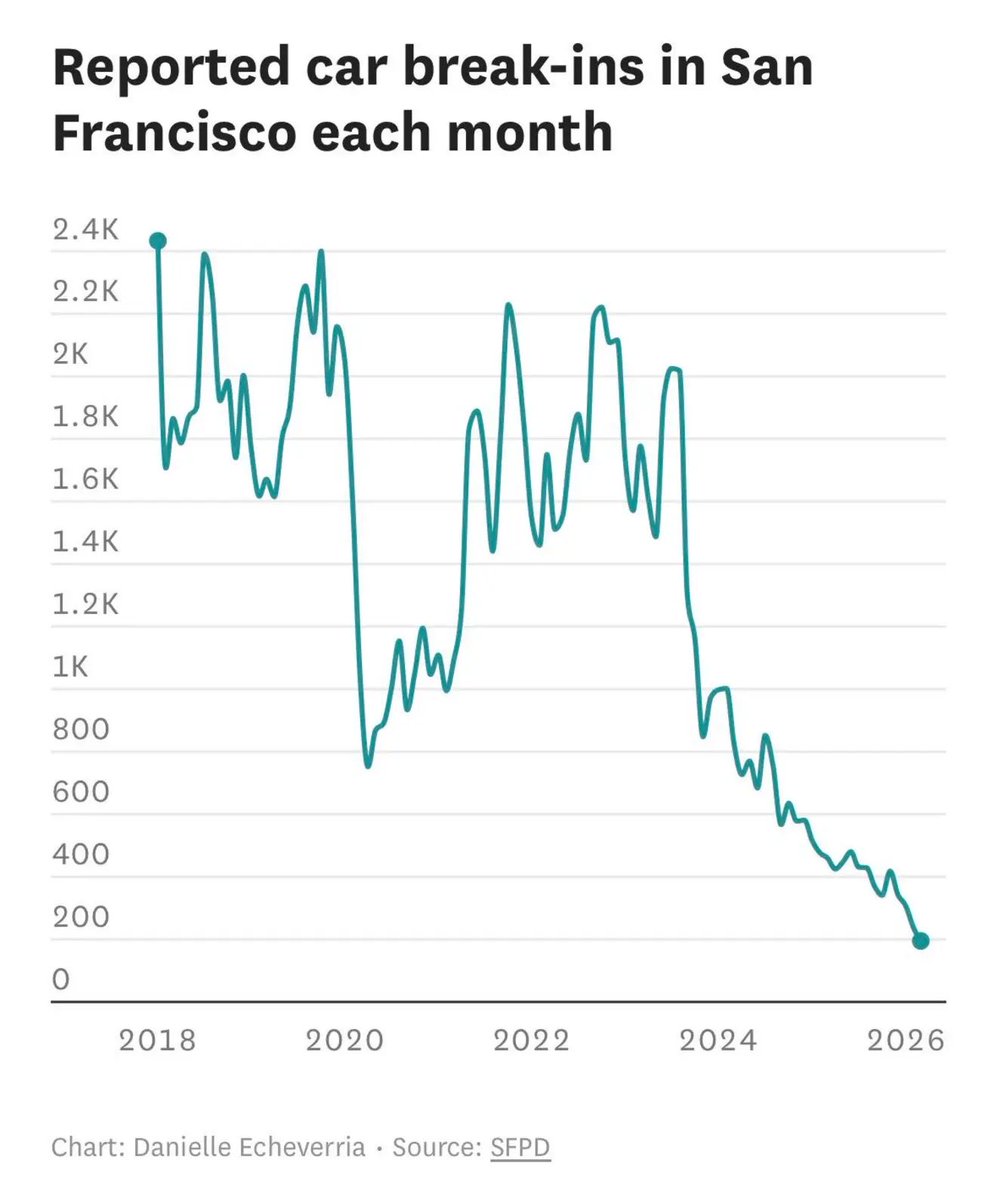
San Francisco is now a model for how to fight crime. A few years ago it averaged 86 car break-ins per day. Today: 15. SF did two things: 1. Got a DA that prosecutes criminals: Following the successful recall of Chesa Boudin, DA Brooke Jenkins started prosecuting prolific offenders and said so loudly. Crime dropped every year since she took office. 2. Put tech to use: In 2024, SF activated 400 license plate readers and deployed 80 drones citywide. This tech feeds officers live intelligence on suspects in motion. Drones alone have assisted in 1,000+ arrests since then. The technology lets authorities solve crimes as they happen rather than depend on much more intensive, legally perilous post hoc investigations (which ironically are often more intrusive than using tech). The results: - Car break-ins down 85% - Robbery down 30% - Burglary down 33%. - Homicides hit their lowest level since 1954. Plate readers, drones, a prosecutor who prosecutes. That's the whole formula! Austin has the opposite approach. License plate cameras are effectively banned. Jail bookings are down despite repeat offenders victimizing innocent people regularly. Bond violations went from 37 in 2020 to 250 last year. SF proved crime is a choice. Austin, so far, keeps making a different one.
5274 526 963540 426 171
Mark Fraas @MarkFraas 2026-04-07T20:06:28.000Z

@AustinJustice We visited San Fran a week ago. It was a huge improvement over the last time I was there around 5 years ago. We saw few homeless and the streets were relatively clean. We never felt unsafe. The Tenderloin was the only area that we visited that looked rough.

2 0 1738 0 0
Jack 🤖 @JacklouisP 2025-11-29T13:00:25.000Z

Welding robots. The original use case for industrial automation—first deployed in the 1960s at GM. 60 years later, they dominate automotive body shops. Hundreds of robots in perfect sync, laying thousands of spot welds per vehicle. But step outside high-volume production and they're rare. Most fab shops still weld by hand. Why? Every new part needs skilled programming. Path planning. Torch angle. Travel speed. Wire feed. Gas flow. All tuned for each weld on each component. The economics only work if you're making thousands of the same thing. High-volume? Solved. High-mix, low-volume? Traditional welding robots fail here... but watch this space a few start ups are starting to fill the gap.

728 82 78389 24 14