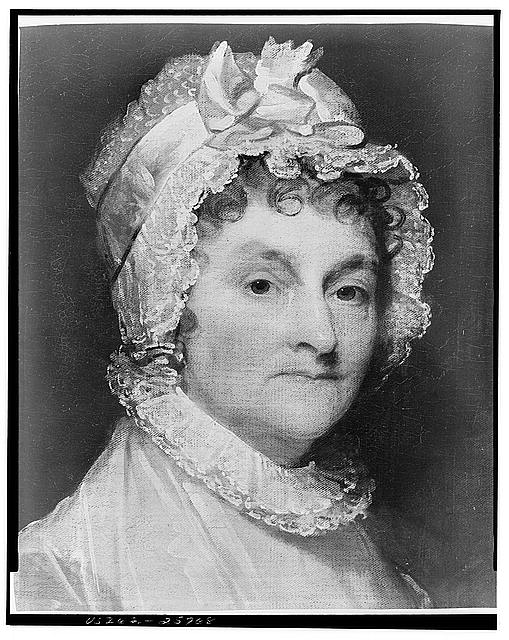
OTD in 1818, Abigail Adams passed away from typhoid fever in her bedroom at her home, Peacefield, in Quincy, Massachusetts. She was first interred in Hancock Cemetery and later removed in April 1828 for internment in the newly built crypt under United First Parish Church, across the street from the cemetery.
Eight days before she died, John Adams, in a letter written to his longtime friend, Thomas Jefferson, wrote on the subject of his wife's health, “The dear partner of my Life for fifty-four Years as a Wife and for many Years more as a Lover now lyes in extremis, forbidden to Speak or be Spoken to. If human Life is a Bubble, no matter how Soon it breaks.” On Monday, October 26, as John sat at his wife’s bedside, grief stricken, Abigail mustered the strength to speak, telling him she was dying and if it was Heaven’s will to take her, she was ready. Her son Thomas stated she was conscious to the last breath.
For her funeral services-I don't have the exact date, either Oct. 31 or Nov. 1-she lay in repose in a room in the downstairs of her home where family and friends gathered for the funeral service. After the funeral, a procession escorted Abigail’s coffin to Hancock Meeting House for a memorial service; Adams, 82 years of age with his walking stick in hand, followed behind the horse wagon conveying his wife’s coffin. The funeral was a major affair for the sleepy hamlet of Quincy and a sizeable crowd was on hand made up of locals from Boston and surrounding hamlets to witness the proceedings. Among the procession was Governor John Brooks, Lt. Governor William Phillips Jr., and Harvard President John Kirkland, all of whom served as pallbearers.
November 18, 1818, in response to her death, Jefferson wrote to Adams. Jefferson's words were heartfelt, moving, and timely. He wrote, “The public papers, my dear friend, announce the fatal event of which your letter of October the 20th had given me ominous foreboding. Tried myself in the school of affliction, by the loss of every form of connection which can rive the human heart, I know well, and feel what you have lost, what you have suffered, are suffering, and have yet to endure. The same trials have taught me that for ills so immeasurable, time and silence are the only medicine. I will not, therefore, by useless condolences, open afresh the sluices of your grief, nor, although mingling sincerely my tears with yours, will I say a word more where words are vain, but that it is of some comfort to us both that the time is not very distant at which we are to deposit in the same casement our sorrows and suffering bodies, and to ascend in essence to an ecstatic meeting with the friends we have loved and lost, and whom we shall still love and never lose again. God bless you, and support you under your heavy affliction.”