Chapter 22 – Of Sins That Become Systems.
The law: In a person, a sin is a weakness to be fought; the movement renames each sin as a virtue, a right or a cause, and then does four things with it. It institutionalizes it, it scales it to the size of society, it integrates it – so that the effect on society is the sum of millions of private sins, added up over years – and then it lets the sum compound. A society that does this ends up governed by its sins.
§1. The old list of the seven deadly sins was not a list of forbidden pleasures. It was a psychology – seven tendencies that destroy a person from within – and it came with its cures, practiced over a lifetime: humility, generosity, chastity, kindness, temperance, patience, diligence. A civilization built on that list did not abolish sin. It kept it private, named and fought. The movement does the reverse. It does not fight the sins; it organizes them. First it institutionalizes them: each one gets a new name, a budget and a ministry. Then it scales them: a sin that was one man's weakness becomes a policy applied to a whole nation. Then it integrates them, in the mathematical sense: the effect on society is the integral of the individual sins – every small envy, every small rage, every small surrender, added up over millions of people and over years. One envious man is his neighbor's problem. Envy integrated over a nation and a generation is a tax system. And then the sins compound, like interest. Each one feeds the others: envy produces punishing taxes, the taxes produce sloth, sloth produces dependence, dependence produces more envy. And each generation inherits the sins of the previous one already built into institutions, and starts from there. The interest is added to the capital, and the next year's interest is paid on the whole. A man can master his sins. A system built on the compounded sum of them masters him.
§2. Pride. Not the healthy pride of the man who has built something – that is a virtue – but hubris: the belief that one mind, or one committee, can design a whole society better than millions of people living their own lives and the wisdom of all the generations before them. Hayek called it the fatal conceit. It is the first sin of the planner, and the only one he will never confess, because it is the one that tells him he is the cure for all the others.
§3. Greed. The movement says it fights greed, and points at the market. But greed in the market must serve customers to be satisfied; greed in the state serves no one and is satisfied by force. The apparatus that lives on taxes, subsidies and permissions is the greediest organism in society – it never has enough, and it never has to earn what it takes. And it breeds greed around it: the businessman who no longer competes for customers but for contracts, grants and favors.
§4. Lust. The sexual revolution was sold as liberation. It delivered the dissolution of the family, children growing up without fathers, and loneliness on an industrial scale. And the state stepped into the place of the absent father: it pays, it educates, it decides. A people that cannot form families depends on the state for everything – and a people that depends on the state for everything is the people the movement needs.
§5. Envy. We met it as a fuel in Chapter 5; here it becomes an institution. Taxes designed less to raise money than to punish success – France taxed wealth for decades and watched the wealthy leave. Schools that level down so that nobody stands out. Quotas that replace merit with category. Envy renamed as "social justice" stops being a private shame and becomes a public program, with officials paid to administer it.
§6. Gluttony. Today it has its own movement: body positivity, which turns the ancient sin into an identity and calls the warning a hate crime. But gluttony is wider than food. It is the habit of consuming today and sending the bill to tomorrow – the high time preference of the previous chapters, organized as debt. Aristocracy is a matter of time preference: the aristocrat plants trees whose shade he will never sit in. The movement breeds the opposite, a whole society that eats its seed.
§7. Wrath. In the old list, anger was a sin to be mastered. The movement made it a virtue and called it struggle: class struggle, the fight against oppression, "righteous rage". Organized anger is its engine – the mob, the campaign, the cancellation. It manufactures grievances so that it can direct the anger they produce, and it rewards whoever shouts loudest. A society that admires rage is ready for the machine of terror; it has already supplied the fuel.
§8. Sloth. The ancient name was acedia, and it did not mean laziness so much as not caring – about one's work, one's neighbor, one's soul. The welfare state relieves people of the duty to care: for their parents, their children, their poor, their town. The state will do it. And so people take care of nothing and care about nothing, and the state that was supposed to relieve them ends up replacing them. The sloth of the mind follows: why think, when the consensus has already thought for you?
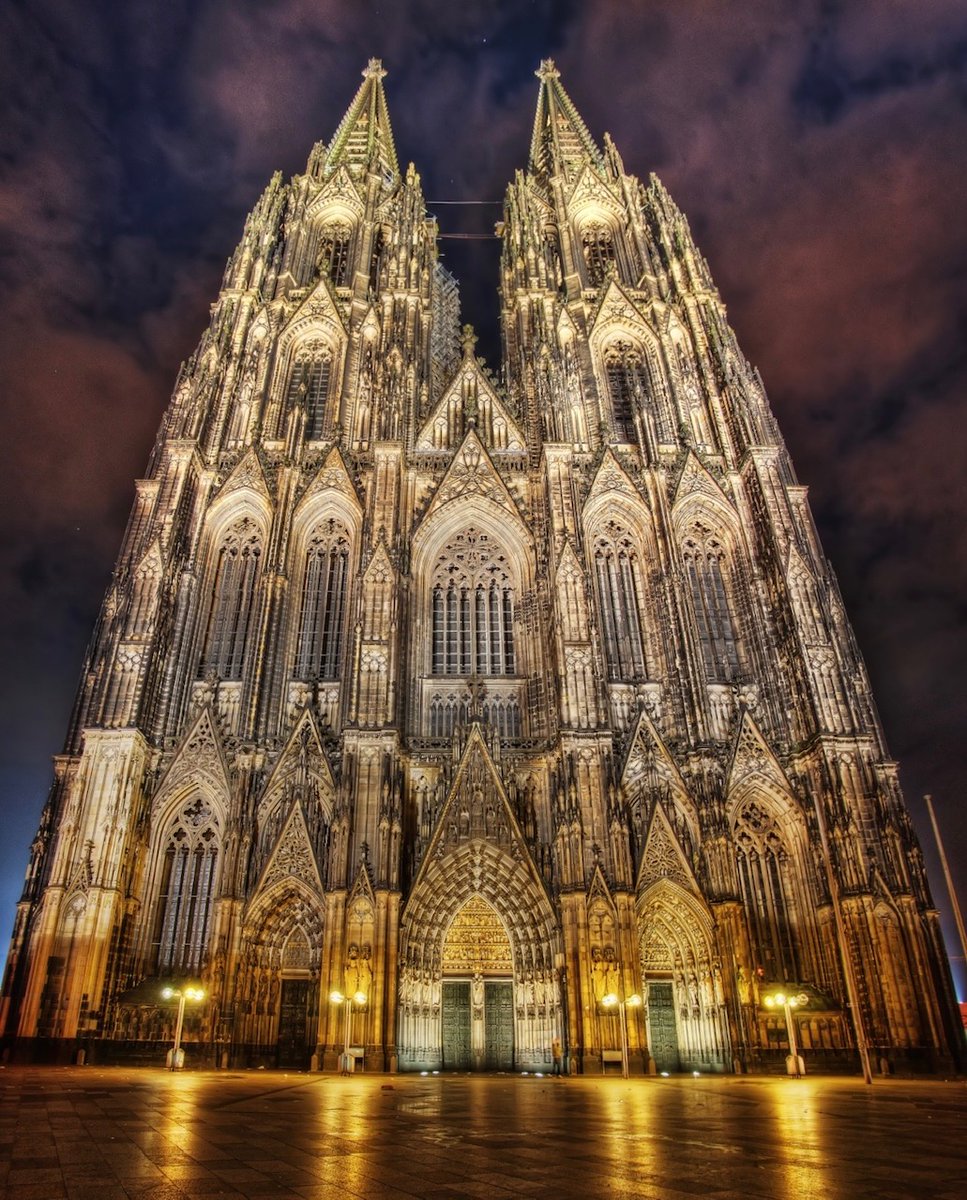
The counter: Call the sins by their names again. The movement's whole technique is renaming, and the first act of resistance is to refuse the new names: envy is envy, not justice; rage is rage, not virtue. Restore the cures as the foundation of the person – humility, generosity, chastity, kindness, temperance, patience, diligence – and let the virtues of the builder grow on that foundation. Look at Cologne Cathedral, raised over six centuries by men who knew they would never see it finished: that is what a civilization looks like when its sins are mastered. A free society is not one without sins. It is one where sins remain private weaknesses – and are never given a ministry.
Next: Chapter 23 – Of the Types That Serve It.
@Kristof_PolandChapter 21 – Of the Supranational Prince.
The law: The prince who cannot win a nation moves above the nations; there he governs through treaties, courts, money and networks that no voter can reach – and he beats every national resistance because he is organized everywhere, while it is organized only at home.
§1. Socialism was born supranational. "Workers of the world, unite" – not of France, not of Poland, of the world. The First International was founded in London in 1864; in 1919 Lenin founded the Third, the Comintern, and from Moscow it directed communist parties in every country as branches of one firm. Their loyalty went to the movement, not to the nation; patriotism was dismissed as a bourgeois prejudice, or used as a costume when convenient. From the start, the movement understood what its opponents still have not: that power organized across borders beats power organized within them.
§2. The soft version has its own International, though it never calls itself one. It is not a single body but a layered structure: the European Union, the agencies of the United Nations, the international courts, the forums where presidents and CEOs meet, the foundations, the NGOs, the global media – each referring to the others as "the consensus". In the European Union, laws are initiated by a Commission that no one elects, and its court claims to stand above national constitutions. And money carries the rest. From 2021, Poland's EU funds were frozen over its judicial reforms; in 2024, after the government changed, they were released – before most of the demanded changes had been made. The condition had never really been about judges. It was about who governed Poland.
§3. Why does the movement love the supranational level? Because voters cannot reach it. What cannot pass in a national parliament can pass in Brussels or Geneva, and come back home as an "obligation" that the national government regrets but must obey. National politicians blame Brussels for rules they quietly asked for themselves. Every step up the ladder of representation adds distance between the citizen and the decision: he elects a deputy, who supports a government, which appoints a commissioner, who negotiates a directive, which is interpreted by a court. At the end of the ladder, nobody he voted for decided anything, and nobody who did can be voted out by him.
§4. And here is the decisive mechanism: country by country, we lose. The Left coordinates across borders – media, governments, NGOs and international bodies backing each other and calling it consensus. Its opposition is national by nature: patriots organize in their own country, in their own language, around their own problems. So any national victory against the movement is attacked from everywhere at once. Hungary, Poland, Italy, America: the same accusations, in every language, in the same week, from journalists, officials and activists who never had to coordinate because they share the same network. Even in Poland, the most pro-American country in Europe, the reports on America come filtered through that network, and there is no network of our own to soften the blows. This is not a question of arguments. Our arguments are often better. It is a question of structure – and a network always beats a crowd.
§5. The supranational prince hides behind beautiful names: "Europe", "the international community", "the rules-based order". Whoever opposes him is made to look like an enemy of Europe itself. That is the Lie in its grandest form. Europe is a civilization – Athens, Rome, Jerusalem, the cathedrals, the universities, the nations that grew out of them. The Commission is an administration in Brussels. To confuse the two is like confusing a man with his tax office. And when an administration claims to embody a civilization while dissolving its nations, its borders and its memory, it is not Europe speaking. It is the foreign civilization of the previous chapters, which has learned to speak in Europe's name.
§6. Yet the supranational prince has a weakness, and it is fatal. He has no army, no people and no loyalty. He lives on money, permissions and the cooperation of national elites – and all three can be withdrawn. Britain voted to leave and left. When the United States cut off the funds of its aid networks in 2025, half of the activist world went quiet within months. When the political pressure turned, the great climate alliances of the banks dissolved one after another. The supranational prince is a network without a people. Nothing is more vulnerable than that – except to a crowd, which is why he has always only faced crowds.
The counter: Keep every decision at the lowest level that can take it – the European Union's own treaties call it subsidiarity, so take them at their word. Keep national constitutions above treaties, and refuse money that comes with political conditions. Name things exactly: Europe is the civilization, Brussels is an administration. And above all, stop fighting country by country. A people cannot beat a network with a crowd; it can beat it only with a network of its own. They built their International a century ago. Ours is long overdue – we will describe it in Chapter 25.
Next: Chapter 22 – Of Sins That Become Systems.