أسئلة لا اجابة لها !
- توجه بعض البنوك لبيع حيازتهم من القروض المرتبطة بتمويل مراكز البيانات بخصومات كبيرة ، لربما يكون مؤشر على شي نجهله الى اليوم !!!!
- في نوفمبر 2025 (يعني قبل سنة) ، شارك بنك HSBC ضمن تحالف يضم 20 بنك في تقديم قرض بقيمة 18 مليار دولار لأحد مشاريع مراكز البيانات التابعة لمبادرة ستارغيت ، الي أعلن عنها الرئيس الأمريكي دونالد ترامب مطلع عام 2025 !
- حصة بنك HSBC كانت 300 مليون دولار !
- في نوفمبر 2026 (قبل كم يوم ) ، كشف تقرير من بلومبيرغ أن بنك HSBC باع القرض الي قدمه قبل سنة مقابل 255 مليون دولار فقط ، أي بخصم 15% من قيمته الأصلية !
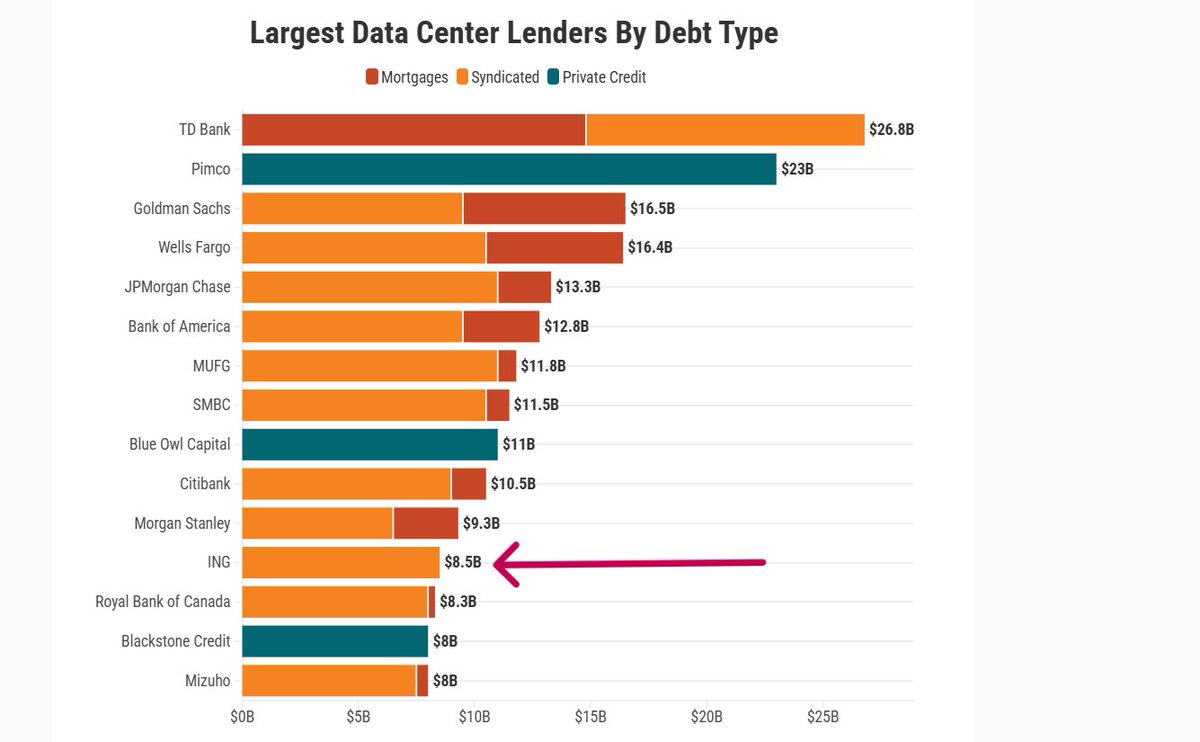
-البنك الهولندي ING، اللي عنده انكشاف اكبر وتقدر حجم محفظته لتمويل مراكز البيانات بنحو 8.5 مليار دولار، حاول بيع قروض بقيمة 500 مليون دولار، لكنه ما حصل على عروض شراء بأسعار مقبولة !
- الشارت اللي تحت يوضح أكبر 15 جهة مقرضة لقطاع مراكز البيانات، من بنوك ومؤسسات مالية، وحجم انكشاف كل بنك ومؤسسة !
@MPelletierCIOMost investors are watching tech stocks while missing what's happening in the AI credit markets:
HSBC reportedly sold $300 million in data centre loans at roughly 85 cents on the dollar, a 15% haircut. ING tried unloading another $500 million but couldn't attract sufficient bids at acceptable prices. Now it's negotiating individual sales.
Reuters is also reporting that banks are becoming reluctant to finance additional AI projects, even those backed by major technology companies.
The timing couldn't be worse. Goldman Sachs estimates hyperscaler debt issuance will surge 68%, from $250 billion in 2026 to $420 billion in 2027, precisely when lenders are becoming more cautious.
I've seen this movie before. As I discuss in my book, the shale oil boom and Canadian cannabis were both built on enormous expectations for future growth and the assumption that capital would remain readily available. I watched both industries discover what happens when those expectations collide with a mismatch in expectations vs what was actually delivered.
AI may very well transform the world, just as shale transformed American energy production. But that doesn't mean every dollar invested will earn an adequate return. When an investment boom depends on an endless supply of capital, the biggest risk isn't whether Jensen Huang comes back. It's whether the lenders do.