π™³πšŠπšŸπš’πš π™²πšŠπš—πšŽπšœ (@CanesDavid)

π™³πšŠπšŸπš’πš π™²πšŠπš—πšŽπšœ @CanesDavid 2024-05-15T17:46:05.000Z

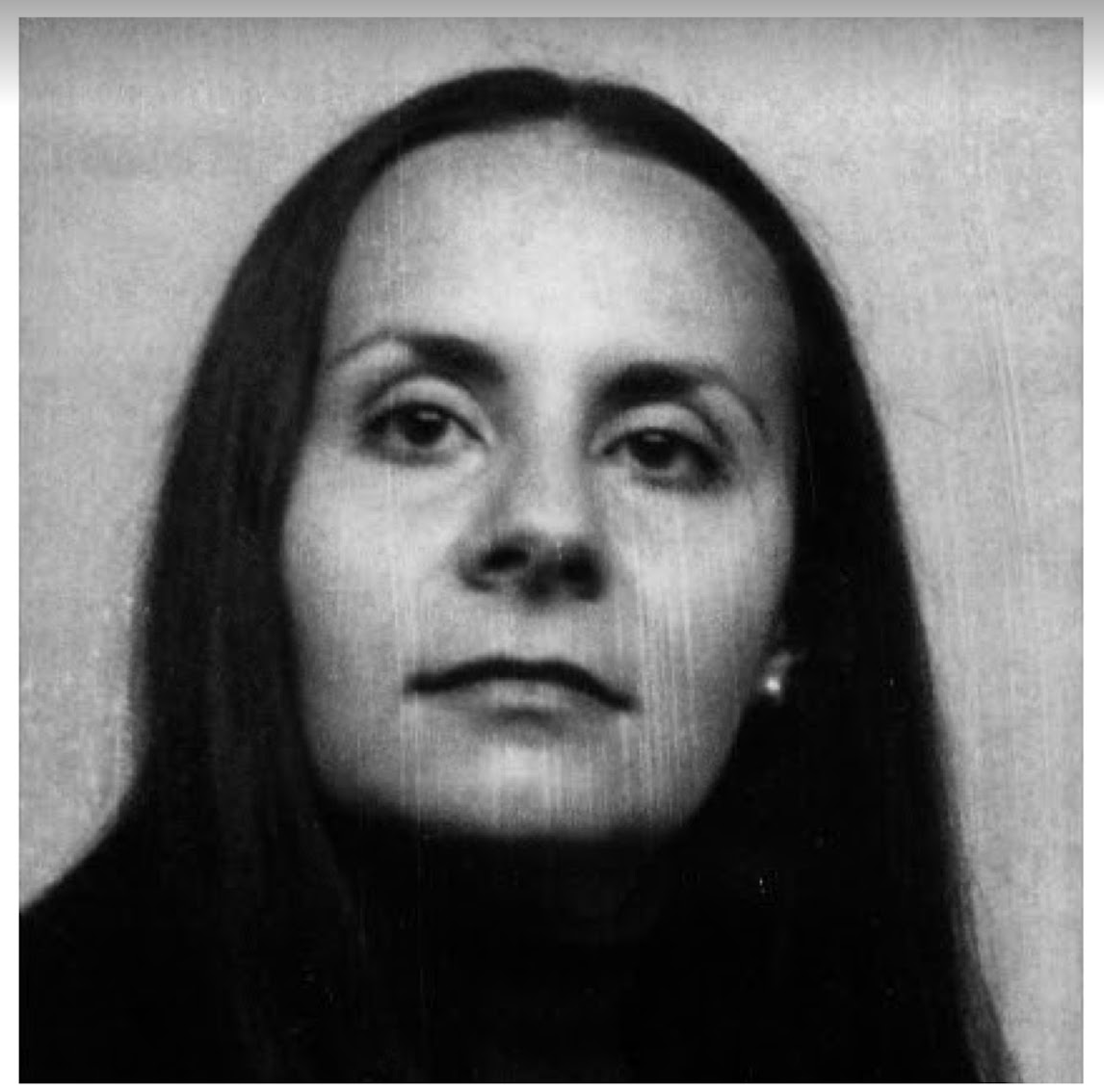
When I was 15, I learned firsthand what grit truly looks like. It was 1990. My mother was 42 and two years into a confirmed Multiple Sclerosis diagnosisβ€”a condition she had suspected since her twenties. She was a dynamic middle school French teacher, beloved by her students. Her South African accent captivated them whenever she snuck in a few sentences in English. She had a way of lighting up any room. My mother's passion for French took her from South Africa to Paris as a teenager, where she studied at the Sorbonne. Though English was her native tongue, she also spoke Afrikaans and Hebrew. Fast forward to 1990: she was teaching at a private school in the NY suburbs, but the public schools offered better salaries (is this still true?). My mother wanted a position in the local public school system. However, the demand for French was dwindling, with Spanish on the rise. She couldn't get a public school teaching job. So, she took a bold risk. She left her job and took a year off to get certified as a Spanish teacher. Only a year? How would that work? Despite not speaking Spanish, her strong foundation in romance languages gave her the confidence to learn quickly. What she did next was remarkable. She went to the local community college and declared she wanted to take Intro and Spanish 101 simultaneously. The registrar said it was impossibleβ€”Intro was a prerequisite for 101. "How about I register for Intro and audit Spanish 101?" she proposed. "If I pass both, you give me credit for both." They agreed. She aced both classes. That summer, she immersed herself in Spanish literature and Telenovelas. She used a Spanish-English dictionary and even a French-Spanish dictionary, finding it easier to map French to Spanish than English to Spanish. This detail still amazes me. She repeated her (now precedented) request for Spanish 201 and 301 and aced them both, earning all the credits needed for Spanish Teacher Certification in one year. This landed her a job, eventually tenured, teaching both French and Spanish at the local public school. My mother passed away from complications of Multiple Sclerosis three years ago. Her determination and resilience continue to inspire me. Where did she get this incredible determination? Her father, my grandfather, immigrated from Lithuania to South Africa at age 14. He worked in a furniture factory, saving half of his weekly salary for English lessons. Through sheer hard work and perseverance, he eventually owned the factory. As a young child witnessing her perseverance, I witnessed the true meaning of grit. Now, as I steer @WellPrept from idea into existence, and now help it expand... I frequently reflect on her tenacity. Every day, I try to embody her ability to tackle challenges head-on and her unwavering belief in herself. I think you can see it in her eyes in the photo.
122 3 18188 27 2
MotoGP325 @motogp325 2026-11-25T00:37:51.000Z

@CanesDavid @francisdeng Hahahahahahah. Radiologist here. I am laughing out loud. On the platform that I use, E-rad, this is exactly what I deal with daily. This is too funny. IYKYK …..πŸ”₯ post man!!

4 0 287 1 0
Brian Pridgen, MD @pridgenmd 2026-11-24T16:06:00.000Z

My partners at The Buncke Clinic are master surgeons and great colleagues. Dr. Safa recently co-surgeoned a case with me, and I wanted to capture his end-to-side anastomosis technique so others could learn from it. Operative video is a powerful teaching tool but labor-intensive to produce. I used Codex from @OpenAIDevs to turn my hand-drawn sketches into this animation. I hope AI makes it easier for surgeons to share the nuances of their operative techniques. This may improve surgical education and the quality of patient care! This was my first attempt at turning my operative sketches into a teaching film. I’d love to hear what you think and what you’d want to see next.

22 3 2276 1 0
Tyler Seibert MD PhD @TylerSbrt 2026-11-23T19:13:28.000Z

πŸ™πŸΌWhat a great weekend discussion! Two polls, with over 550 combined votes. Numerous conversations and excellent comments. A quick 🧡 to summarize the discussion, plus my own thoughts about tackling these cases with conflicting test results. 1️⃣

@TylerSbrt

🚨Poll 2 (of 2) GS 3+4(30%), Decipher 0.95 (luminal B). MRI: PI-RADS 4 plus suspicious left pubic bone lesion. PSMA: negative in prostate and bone. ‼️UPDATES ▢️Biopsy - hypercellular marrow, benign ▢️Fluciclovine PET - positive in bone Images πŸ‘‡πŸΌ What do you recommend?

10 2 3034 3 1
mcp @cambronious 2026-11-23T15:56:40.000Z

@CanesDavid @Sonos I had 2 Play 1’s, a Play 3, and a Play 5. Then after upgrades etc I had to use Sonos app V1 for one of them V2 for others. Now they all sit in the closet. I loved it for years, now they collect dust.

1 0 11 1 0
@CanesDavid reposted
UrologyWatch.com @UrologyWatchHQ 2026-11-22T00:39:35.000Z

Studying for the @ABUrology oral boards? Great new case bank from @CoYoUroMD and @HHuelsterMD: 80+ oral board-style cases, written by urologists who have been through it. Now in the Boards section of our Trainee Hub. https://www.urologywatch.com/trainee#lg-boards

@CoYoUroMD

Studying for your @ABUrology oral boards? Know someone who is? @HHuelsterMD and I are excited to share a new study resource, https://t.co/ssWPaoxipO! Our incredible authors created over 80 (and counting) oral board-style cases for targeted practice. Free for everyone. :) https://t.co/ufgPS0u5eG

8 1 1259 0 0
Jack Andrews @JackAndrewsMD 2026-11-21T18:32:01.000Z

TLDR: The false positive rate of conventional imaging for intermediate risk disease with a negative pet is actually quite high. I would consider him non-metastatic Curious what his PSA is. But assuming it’s not 20+, this represents one of 2 big conundrums in PCa staging. Most ambiguous -> conventional negative, but PSMA is positive. The question being how much β€œearlier” are we in the disease course? How do we extrapolate historical prognostication to the current PSMA era? In this case, conventional is positive and PSMA is negative. When conventional and PET is positive it’s reasonable to assume a worse prognosis then PET positive only. But when the pet doesn’t confirm the diagnosis the other clinical factors matter more. For example; if this gent had GG4/5 or a PSA of 25 then I would assume it to be real Mets. (Be careful with the GG4/5 PSA 1-2, these are sometimes worst actors) But for GG2 and a PSA less then 10 it’s reasonable to consider it more then likely a false positive. The false positive rate of conventional imaging for intermediate risk disease with a negative pet is actually quite high. The current biomarkers are good prognosticators, but are not validated classify someone as metastatic and to remove potentially curative treatment options. So we need to be careful with decipher and Artera here. They need to do a lot more studies to show value here. In 10 years there will almost certainly be a predictive liquid biomarker that is a surrogate for Micro Mets (CTCs, EVs etc) For me this guy would be treated as non metastatic.

@TylerSbrt

GS 3+4(30%), Decipher 0.95 (luminal B). MRI: PI-RADS 4 and suspicious left pubic bone lesion. PSMA: negative in the prostate and in the bone. What is your assessment/plan? Images πŸ‘‡πŸΌ

17 3 3675 5 0
Caffeinatedoc @caffeinatedoc 2026-11-19T18:05:33.000Z

Unpopular opinion, but surgery is 99% repetition and 1% talent. And honestly, I’m being generous with that 1% Medicine, on the other hand, requires actual grey matter. No amount of hands-on experience can compensate for what's missing upstairs.

1474 97 278869 168 94