Bugs Finds Bigfoot 👣🪶 (@Bugimus)

Bugs Finds Bigfoot 👣🪶 @Bugimus 2026-04-08T11:54:00.000Z

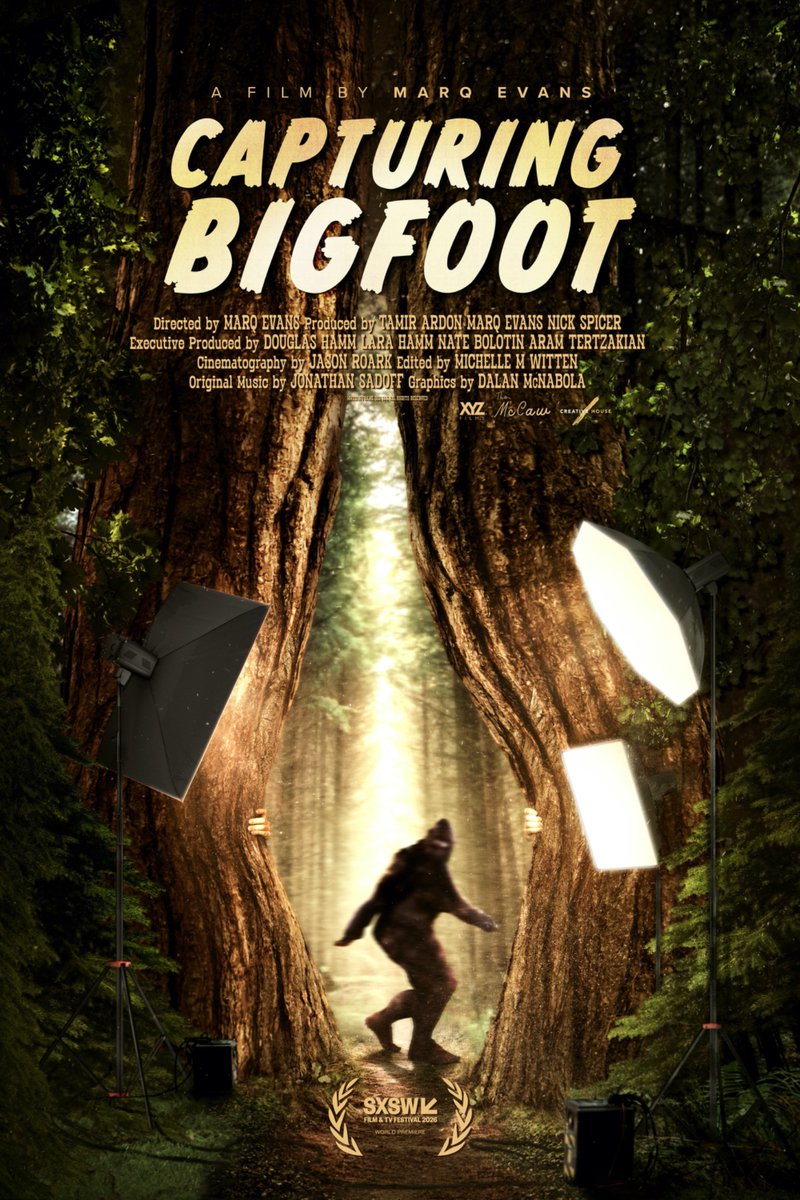
Bugs’ Lucky Capture Hypothesis: Reconciling the Patterson-Gimlin Film with the New Footage from Capturing Bigfoot With all the recent discussion around the new footage in Capturing Bigfoot, I’ve been wrestling with how it relates to the Patterson-Gimlin Film (PGF). As a Bigfoot experiencer, I start from the position that Sasquatch are real. At the same time, the biomechanical and forensic evidence has long convinced me that the figure in the PGF — known as Patty — is a genuine living hominid, not a suit. The big question has been: if the PGF is authentic, what exactly is this newly revealed clip? Here’s my hypothesis: The PGF captured one extraordinarily lucky daytime moment with a real creature (Patty), while the new footage appears to be a post-1967 human attempt to study and replicate her distinctive walk for potential follow-on projects. I build directly on Bill Munns’ forensic film analysis and add the human motivation layer. I’m open to respectful discussion — let’s examine the evidence together. The Lucky Capture Hypothesis Core Premise On October 20, 1967, at Bluff Creek, California, Roger Patterson and Bob Gimlin opportunistically filmed a real female Sasquatch — known as Patty — walking calmly away with her natural over-the-shoulder glance. As a Bigfoot experiencer, I accept that Sasquatch are real, intelligent, and elusive biological beings. The Patterson-Gimlin Film captures one extraordinarily lucky daytime moment of a living relict hominid. Patty’s fluid muscle rippling under the skin, independent breast motion, concave armpit fold, unique conical head shape with sloping brow-to-back profile, compliant gait with a mid-tarsal break, seamless neck rotation, and non-human proportions remain impossible for 1960s suit technology. These details, supported by photogrammetry, gait analysis, and expert comparisons, mark the PGF as authentic biology rather than fabrication. Same-day footprints with dermal ridges provide independent physical corroboration. The New Footage (NF) in Capturing Bigfoot The ~40-second clip, shot on 1966-manufacture Kodachrome II stock, shows a skinnier suited figure in the woods with a horseback rider resembling (but not necessarily being) Gimlin. The documentary presents this as a pre-1967 “dress rehearsal” proving a premeditated hoax. Building directly on Bill Munns’ forensic analysis — after he physically examined the camera-original processed film — the NF is clearly a human suit with obvious tells: unnaturally white feet that don’t tone-match the ground like Patty’s, a cruder head shape, and inferior overall dynamics. Yet the gait (stride, arm swing, head turn, raised-foot sole display, and compliant flex) is too identical to Patty’s to be coincidence. This points to deliberate post-PGF copying: someone studied the authentic footage frame-by-frame and trained to replicate her distinctive locomotion. Munns’ technical foundation is the starting point; what follows is my extension exploring the very human motivations behind it. The Human Opportunism — Raw and Unflattering Roger Patterson was the passionate showman with big documentary and feature-film dreams while facing terminal cancer. Al DeAtley was the wealthy, profit-minded brother-in-law and business partner who provided financial backing and reportedly expressed initial skepticism. After the lucky real capture, they didn’t stop at celebration. They saw the raw, shaky PGF as proof-of-concept but not polished enough for sustained success. In classic flawed human nature — mixing ambition, greed, and opportunism — they used Patty’s gait and movement as the ultimate reference blueprint to test whether they could manufacture believable replicas. The NF was the proof-of-concept prototype, shot after 1967 and processed discreetly. It was designed to answer practical (and cynical) questions: Could they create controlled docudrama B-roll? Could they produce smoother, multi-angle promotional footage? And, more ambitiously, could they stage follow-on “encounters” or films convincing enough to keep generating revenue, lectures, licensing, and legacy for years? With the real McCoy as template, upgraded reels could become the “best hoax ever” — reverse-engineered from actual biology and locomotion. This was not pure scientific pursuit; it was entrepreneurs spotting a once-in-a-lifetime opportunity and scheming how to maximize it financially and personally. Why the Plan Never Fully Panned Out The NF was developed and reviewed, but real-life friction intervened. According to accounts, Norm Johnson’s wife saw the obvious replica footage (with its suited figure mimicking Patty’s gait) and feared it could implicate her husband in fraud accusations if ever linked to the promoted-as-real PGF. She reportedly ordered it locked away in the safe. Patterson died in 1972, removing the driving visionary. Legal rights disputes piled up, and once the original PGF began generating steady licensing income, the incentive to risk new material diminished. The canister remained sealed for decades until rediscovered after Johnson’s death and shared for the documentary. Why This Hypothesis Holds Building on Munns’ forensic work while adding the motivational layer, the Lucky Capture Hypothesis turns the new footage from a perceived threat into indirect support for Patty’s authenticity. Humans could copy the visible walk with direct reference material, but they still couldn’t replicate the underlying biology. Burned-suit stories, family recollections, and the horseback staging all fit naturally as elements of post-capture replication experiments rather than proof the PGF itself was faked. No grand conspiracy is required — just unflinching human nature. When flawed, ambitious people receive a genuine lucky capture on film, greed and opportunism often ride shotgun. The PGF remains powerful corroborative evidence of a real Bigfoot. The Lucky Capture Hypothesis simply explains the cynical human drama that tried (and ultimately failed) to build a longer-lasting revenue stream on top of that lucky moment.
83 12 34492 28 7
$MrRezL @Rez_Lizard 2026-11-26T17:02:05.000Z

Happy thanksgiving 🦃 from my family to yours. If you don’t celebrate thanksgiving because you became woke and need something to offended about, that’s cool but please don’t come for scraps when no one is giving you the attention that you crave. 🦬🪶🦅🦃.

29 0 343 8 0
UAP News Center @UAPNewsCenter 2026-11-25T21:26:48.000Z

Now we're having fun!

@GuntherEagleman

🚨 HOLY CRAP! This Jesse Watters Bigfoot segment just went completely off the rails in the best way possible. Bigfoot investigator Ronny LeBlanc came on and claimed Bigfoot and UFOs are connected, suggesting Sasquatch might actually be INTERDIMENSIONAL and able to cloak and turn invisible. WAIT UNTIL YOU HEAR HIS OHIO STORY. He says he and three other people watched an orange orb split into two eyes and literally turn into a Bigfoot right in front of them. He also claims Bigfoot smells like rotting garbage and uses infrasound like killer whales and tigers to stun prey and hit humans with an overwhelming wave of fear. Honestly, between UFOs coming out of the oceans and invisible stinky Bigfoot morphing out of orange orbs in Ohio, 2026 is officially the wildest year on record.  If Jesse sends Johnny on a Bigfoot hunt, I am tuning in live. 👀🤣

26 5 1573 1 0
Bugs Finds Bigfoot 👣🪶 @Bugimus 2026-11-26T13:50:26.000Z

Happy Thanksgiving from Bugs Finds Bigfoot. 👣🪶 I’m thankful today for family and friends, for the basic needs that are easy to overlook, and for the quiet mercies we often take for granted. Most of all I’m thankful to the One who makes it all possible — and for the love that has been shown to us all. May your Thanksgiving be filled with warmth and goodness. 🙏🦃

32 5 547 7 0
WindTalker @nmlinguaphile 2026-11-26T00:22:38.000Z

A Thanksgiving Story Older Than Plymouth Traditional Thanksgiving is my favorite holiday. I don’t want to detract from tomorrow. Families, including my Native family, will still gather, give thanks for the harvest and the people around the table, and mark the day in the way most of us have known since childhood. But there is more to the story than the 1621 gathering at Plymouth. The Plymouth Thanksgiving wasn’t the first. The first documented English Thanksgiving in what is now the United States was held on December 4, 1619, at Berkeley Hundred on the James River in Virginia. About 35 to 38 English settlers stepped ashore that day roughly 25 miles upstream from Jamestown. They had sailed from Bristol on the ship Margaret under Captain John Woodlief, a man who had already survived the 1609 to 1610 Starving Time at Jamestown. Their written instructions from the Berkeley Company proprietors in England were explicit. The day of the ship’s arrival “shall be yearly and perpetually kept holy as a day of thanksgiving to Almighty God.” They followed the order. Contemporary accounts and the company papers indicate the men knelt and offered a formal prayer of thanks for safe arrival. It was a religious observance, not a harvest feast. There is no record of a large meal, no turkey, and no Native guests. Anglican practice at the time often favored fasting or restraint on such days rather than celebration. The event was planned before they left England. It was not spontaneous. Berkeley Hundred was one of several private plantations granted by the Virginia Company of London. The settlers intended to plant tobacco and other crops on land that belonged to the Powhatan paramount chiefdom. The Powhatan people under Wahunsenacawh (wah-HUN-seh-nah-kah), known to the English as Powhatan, had already been dealing with the Jamestown colony for more than a decade. Relations had swung between uneasy trade, conflict, and temporary alliances. The 1619 arrival itself did not include a diplomatic meeting with local leaders. The thanksgiving tradition they established lasted only briefly. On March 22, 1622, Opechancanough (oh-peh-CHAN-kuh-noh), who had succeeded Wahunsenacawh, coordinated a coordinated attack across the Virginia settlements. Roughly 347 English colonists were killed in a single day. Nine settlers died at Berkeley Hundred. Survivors abandoned the outlying plantations and fell back to fortified sites closer to Jamestown. The annual day of thanksgiving ordered in the original instructions was not observed again for centuries. The story stayed buried until the late nineteenth century, when documents known as the Nibley Papers turned up in a library collection. Those papers preserved the original company instructions and details of the voyage. Once rediscovered, Virginia began marking December 4 at Berkeley Plantation. President John F. Kennedy later recognized the site in a 1963 proclamation as the location of the first official English Thanksgiving in America. The 1619 event differs sharply from the 1621 gathering at Plymouth. The Plymouth occasion was a three-day harvest festival after a brutal first winter, attended by roughly 90 Wampanoag men led by Ousamequin (oo-SAH-muh-kwin) and about 53 English survivors. It was not called Thanksgiving at the time. Edward Winslow’s short account never uses the word. The Berkeley observance was smaller, earlier, explicitly religious, and ordered in advance. No Native people took part. Both events sit inside a larger pattern. Spanish colonists held a Mass of thanksgiving at St. Augustine in 1565. French Huguenots did the same in Florida. English fishermen and settlers along the Maine coast marked days of thanks in the early 1600s. Native nations across the continent held their own harvest and first-fruits ceremonies long before any of these. The Berkeley Hundred service is simply the earliest documented English one that carried a formal instruction to repeat it yearly. The clean version is this. Thirty-odd Englishmen landed on Powhatan ground in December 1619, knelt, and gave thanks because their investors had told them to. They called the day a thanksgiving and intended to keep it. Two and a half years later the settlement was gone. That is the record. Tomorrow we can still sit down together, pass the food, and be glad for the people who show up. History does not have to get in the way of that. But history should be remembered. All of it. Grok image:

281 45 3047 25 7
Bugs Finds Bigfoot 👣🪶 @Bugimus 2026-11-26T13:21:14.000Z

They studied his remains. The bite marks on the bones were consistent with a wolf-like creature and so were the plaster casts taken of the prints found around the incident. Several witnesses at the presumed time of the attack reportedly heard howls coming from that location. The fur samples came back inconclusive but several key researchers insist they prove the wolf’s existence. So I ask you, what else could have led to such carnage? Hmm???

0 0 6 0 0
Chris Duncan @Chrisquatch 2026-11-26T02:45:57.000Z

Not necessarily. Circumstances change things. I would imagine somewhere along the line, a hoaxer had a legitimate encounter. Unfortunately the credibility of that person is mostly destroyed. I feel Todd Standing has this problem. Even more so, Sonny Vator. For someone to go to the lengths they go to attempt a hoax shows a high amount of determination, but with that determination comes a desperation that I can’t get my head around. Was there something that happened that inspired them to push the narrative so hard in order to get the public to believe what happened to them that they go to these lengths to pull off the hoax? The psychology of hoaxing is interesting, but this intrinsically makes me spend more time scrutinizing the hoaxer than I do their evidence.

2 0 24 1 0
Bugs Finds Bigfoot 👣🪶 @Bugimus 2026-11-26T13:12:25.000Z

@Chrisquatch That’s a very good point. I’ve also been very curious what motivates hoaxers. I spent the most time on Rick Dyer because of his “Hank” hoax. I concluded he was just a huckster who truly enjoyed messing with people. I also think they have massive egos and need lots of attention.

1 0 16 1 0