Kazakhstan is gradually becoming a technological hinterland for Russia. It offers Russian IT companies a base of operations and gives Russia a way to circumvent sanctions and gain access to technology developed abroad. This is part of Kazakhstan’s effort to balance Moscow’s interests against Western demands.
Russian companies have already obtained Western microelectronics through Kazakhstan. They are now looking there for backup computing capacity for their digital services and may soon try to secure regular shipments of Nvidia B300 chips.
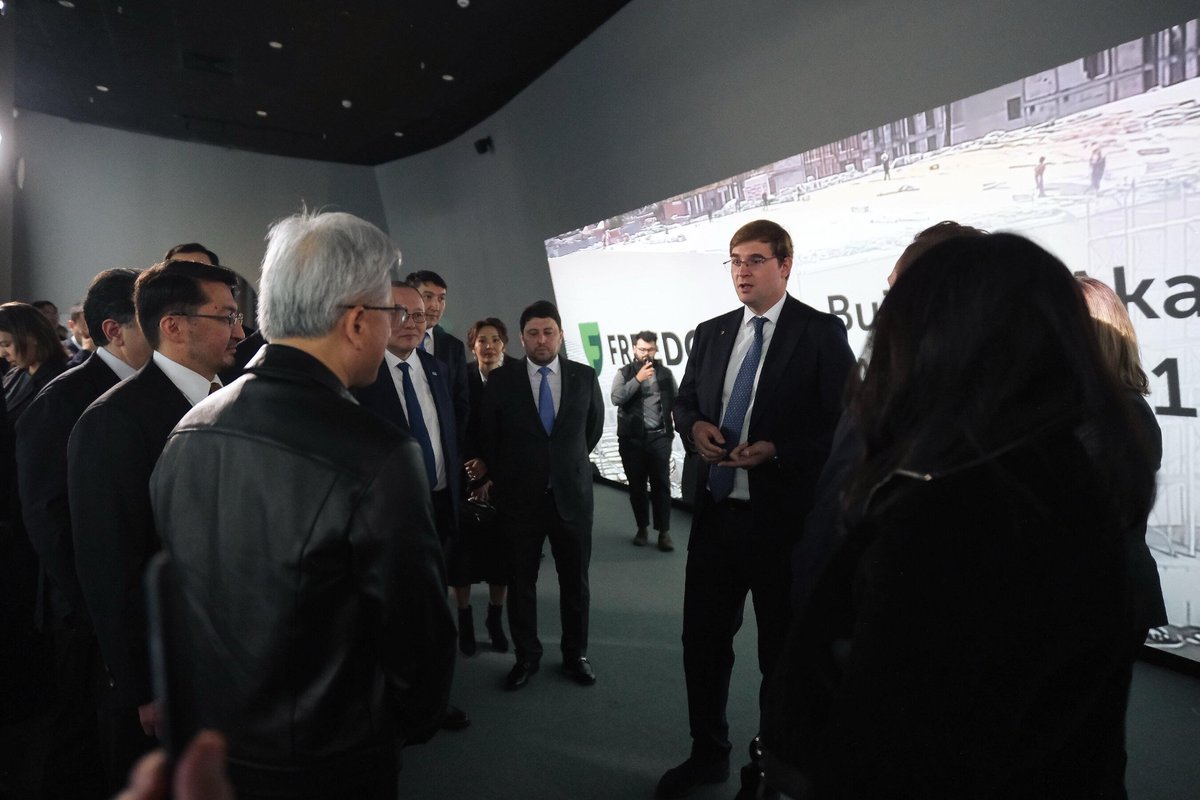
In October 2026, Freedom Holding unveiled plans in Astana for the Sovereign AI Hub, a $2 billion artificial intelligence centre. For its first cluster, which will comprise up to 300 servers, the company announced an order for B300 chips designed by the US firm Nvidia. It plans to give customers remote access to this computing capacity in 2027. On 26 November, during a visit to Moscow, Kazakhstan’s President Kassym-Jomart Tokayev pledged to support the Russian companies Yandex and Sberbank in the Kazakhstani market.
As early as March 2025, Putin instructed the government to work with Sberbank on deploying AI so that Russian drones could operate more autonomously.
Once B300 chips reach Russia through Kazakhstan, what will matter most to Moscow is how regularly the shipments arrive. A steady supply of new servers will allow Russian developers to keep updating military software for years to come and to process data from the front in their own data centres. Russian companies will also be able to move some commercial workloads abroad, freeing up servers in Russia to handle sensitive data.
Russia has already received large shipments of this kind of equipment through third countries. According to Bloomberg, a single Indian company shipped 1,111 Dell servers to Russia between April and August 2024. Documents confirm that 998 of them contained Nvidia H100 chips. Malaysia was listed as the country of origin for at least 834 of the servers. In 2022, Kazakhstan exported $18 million worth of microchips of various types to Russia. Over a five-month period in 2023, Hong Kong suppliers shipped $17.6 million worth of Nvidia products to Russia. The US has also documented shipments of dual-use goods through companies in Turkey, the United Arab Emirates and Kyrgyzstan.
The Russian military needs these chips most. It has already amassed video footage that it can use to train military AI systems. On 12 October 2026, Russia’s Ministry of Defence said it had opened its archive of combat footage to more than 40 organisations developing such systems. Servers equipped with B300 chips can process that footage faster. Intelligence analysts will be able to review more critical clips and get the information to commanders in time. Drone developers will be able to install a single improved image recognition program across an entire production run of drones. The B300 itself operates in a data centre. A compact computer on board the drone runs the trained model. Ukrainian intelligence found just such an Nvidia module in a Shahed-136 shot down over the Sumy region. One implication for Ukraine is that some Russian drones will be able to continue their missions even after losing contact with their operators.
Another application is in manufacturing. At a Rostec plant, a machine vision system already detects defects in the blades of the PD-8 civilian aircraft engine. If military factories adopt the same inspection method, they will be able to catch defects before final assembly and spend less time correcting them. In a protracted war, that affects how much equipment industry can deliver to the armed forces in working order.
The threat extends beyond Ukraine. Russia already sends drones into NATO airspace on a regular basis. If Russian drones can keep flying after losing contact with their operators, they could be programmed to reach more distant targets. NATO allies will have to factor that into any decision to intercept them. They will have little time to assess Moscow’s intentions.
Russia also uses its own servers to interfere in the domestic politics of NATO countries. According to the US Treasury Department, Russian military intelligence funded an AI server at the Moscow-based Center for Geopolitical Expertise, which spread disinformation during the 2024 US elections. In Europe, researchers investigating the Operation Overload campaign identified videos that used synthetic voices to attribute fabricated statements to journalists and academics. Access to powerful chips makes it possible to produce such material in several languages simultaneously.
Both the US and the EU can influence whether Russia gains unrestricted access to the technology it needs. The US could authorise shipments of Nvidia B300 chips to Kazakhstan one batch at a time and agree with Astana to check the serial numbers of servers already installed before the next batch is shipped. If the operator cannot verify the equipment’s location, the US Commerce Department can suspend or revoke the licence. US rules already prohibit companies from servicing servers they know were illegally diverted to Russia. Under rules dated 19 November 2026, Washington can also verify whose workloads the Kazakhstani data centre is actually running. It can deny a licence if a Russian company seeks computing capacity above the specified threshold, including through an intermediary.
The EU can scrutinise the contracts of its exporters and cloud service providers. For certain categories of electronics, exporters must include a clause in their contracts with Kazakhstani buyers prohibiting re-export to Russia. They must also report any breaches to the authorities. European providers are prohibited from giving the Russian government or companies registered in Russia access to high-performance computing or AI training platforms, including through intermediaries. If targeted sanctions against intermediaries and talks with Astana fail to stop systematic re-exports, the Council of the EU can vote unanimously to restrict exports of specific goods from the EU to Kazakhstan. In April 2026, the Council used this mechanism to restrict exports of certain machine tools and telecommunications equipment to Kyrgyzstan.
📷: Nvidia CEO Jensen Huang (left) and Freedom Holding CEO Timur Turlov discuss plans for AI infrastructure in Kazakhstan. Astana, 23 October 2026. Photo courtesy of Freedom Holding Corp. via PR Newswire.