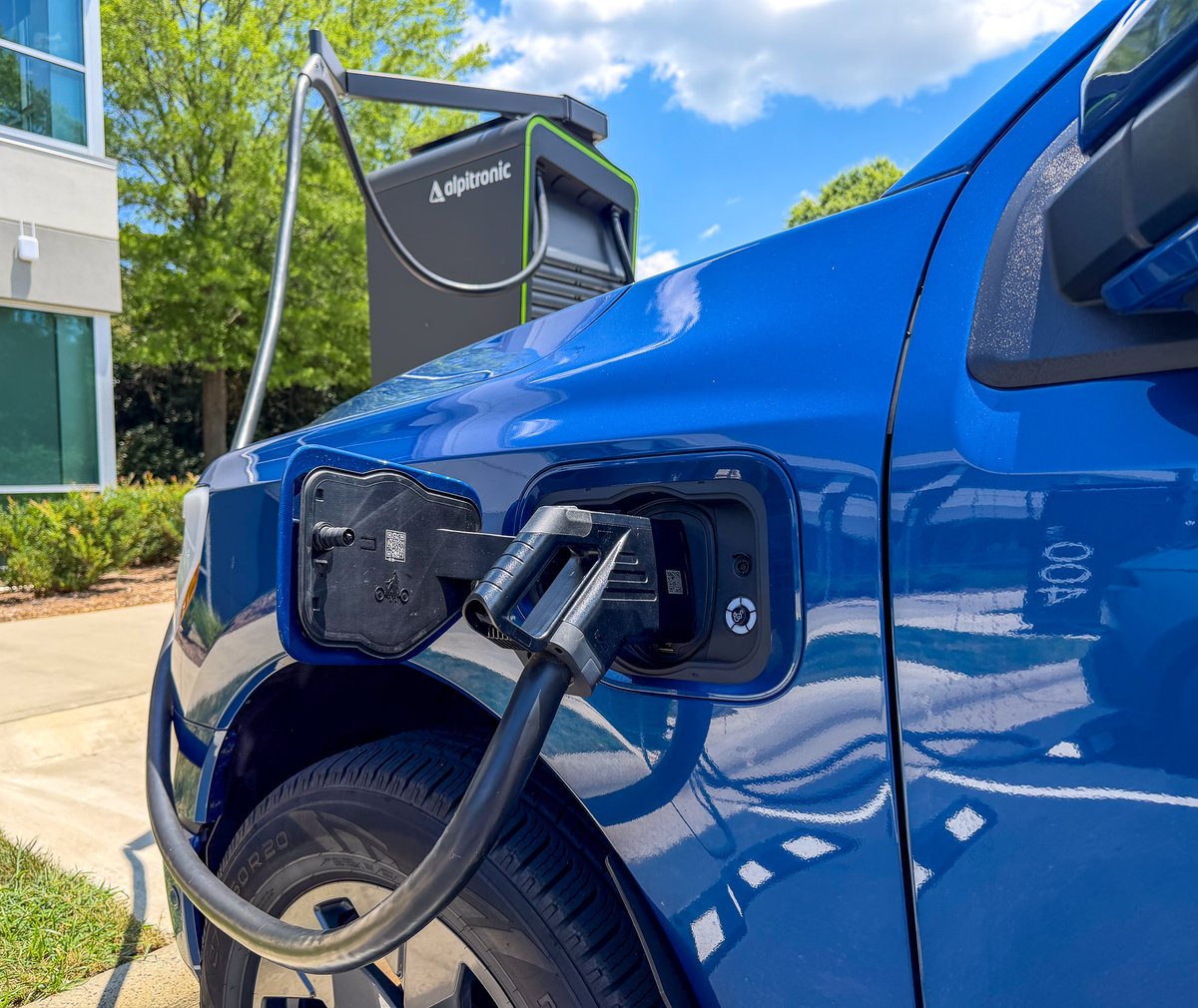
Plug and Charge in North America feels like the days of locked cell phones, except the lock belongs to the company that built the car.
The contract certificate is the SIM card. Every network is a roaming partner, and you pay the roaming rate even where you already have a local plan. The automaker controls how that contract gets into the car, so the automaker picks the billing provider, the networks and the price. @hubject said as much to @CalEnergy in April - Plug & Charge "can effectively be locked to a single eMSP or billing provider chosen by the OEM."
Pricing: A @TeslaCharging Supercharging Membership only applies when the session starts in the @Tesla app. Plug in first and OEM Plug and Charge takes the session at the non-member price.
@ElectrifyAm is similar - the only Pass+ pricing I can find on a Plug&Charge session is a separate plan sold through the OEM and locked to one vehicle (@BMW's $7/month plan in the My BMW app, @VW's 2-year promo).
Control: @GM lets drivers toggle Plug & Charge per network and Ford has a switch in the app. @Rivian owners have no switch at all, so they have to pay first and plug in second, which is the opposite of what most chargers tell you to do.
Coverage: Tesla vehicles have no ISO 15118 Plug and Charge on any third-party network. @Honda and @Stellantis EVs don't seem to have it anywhere yet, and VW and Lucid only list Electrify America.
Autocharge fills the gap, and @evgonetwork says Autocharge+ started 30% of its sessions in Q4 2025. It works, but identifying a car by its MAC address is a workaround for a problem that shouldn't exist.
Discovery: It's hard to even know which networks a car has Plug and Charge on, or where the OEM's app can roam. GM's Plug & Charge at EVgo is really just EVgo's Autocharge+ (EVgo says so itself).
Credit where it's due - @Ford's list of 7 is the most of any OEM I can find. BMW already lets European drivers add a contract from another provider using just the VIN. The same car in the US holds 2 contracts, both chosen by BMW, and you have to pick the right one by hand before you plug in or the session fails.
Europe isn't ahead at the charger (@Fastned and @EnBW still run on Autocharge), but it is ahead on rules. AFIR gives drivers the right to decline automatic authentication, and ISO 15118-20, the version that handles multiple contracts, is required on new public chargers from January 2027. NEVI only asks that a funded charger be "capable of Plug and Charge."
What should change:
- OEMs ship a per-network Plug and Charge toggle. GM already has one.
- OEMs accept contracts from providers they didn't pick. BMW already does this in Europe.
- A marketplace for contracts, so providers compete for the driver and not for the OEM.
- CPOs let a member tie their own account to the car.
- OEMs publish one current list of where Plug and Charge and roaming work.
Unlocking phones took an act of Congress in 2014. I'd rather we fix this as an industry.