Mark Coulter (@Albatrosswon)

@Albatrosswon reposted
dzp @Promise_dzp 2026-11-28T07:32:46.000Z

1911年8月29日清晨,美国加州奥罗维尔,屠宰场外的狗叫个不停。工人出去看,畜栏边有一个瘦得只剩骨头的印第安男人,大约50岁,几乎没穿衣服。他的头发被火烧得很短。 他是亚希人,全族只剩他一个。烧短头发,是在为死去的亲人守丧。他后来在大学博物馆住了五年。他说过,死后不想被切开。 亚希人住在加州北部的山谷里,淘金热之前大约有几百人。白人移民来了以后,杀印第安人有赏钱,一张头皮50美分,一颗人头5美元。1865年的一场屠杀里,大约40个亚希人被杀。 那时他大概只有四五岁。屠杀之后,剩下的几个家人躲进深山,一躲就是四十多年。外面的白人大多以为,亚希人早就死光了。 1908年,一支测量队撞见了他们的营地。几个人四散逃走。之后三年里,他的亲人一个一个死去。1911年夏天,他一个人走出了山。 警长给他戴上手铐,把他关进县里的监狱,给他一碗豆子。差不多一个星期,没有人听得懂他说话。 加州大学的人类学家沃特曼赶到奥罗维尔。他试着念出几个亚纳语的词,对方听懂了。他随后把这个人带到旧金山的大学人类学博物馆。 博物馆馆长克罗伯问他叫什么。按亚希人的规矩,自己的名字要由同族的人来说。他回答,我没有名字,因为没有人来替我叫。克罗伯给他起名伊希,在他的语言里就是「人」。 伊希住进了博物馆,当助理清洁工,打扫展厅。周末他给参观的人表演做箭头、钻木取火。博物馆开放后的六个月里,大约有两万四千人来看他。 他学了一些英语,开了银行账户,喜欢坐有轨电车和渡轮。大学医院的医生波普成了他的好朋友,跟他学做弓箭,一起去打猎。 1916年3月25日,伊希在加州大学医院死于肺结核,大约55岁。据记载,他最后说的话是:「你留下,我走了。」 克罗伯当时不在旧金山。他认为亚希人的传统要求遗体完整。他在3月24日写信回来说:「如果有人拿科学的利益来说事,替我告诉他们,科学见鬼去吧。我们要站在朋友这一边。」 信到得太晚了。医院照规定做了解剖,死因写的是晚期肺结核。他的大脑被取出来,称了重量,泡进罐子里保存。 剩下的遗体火化了,和他的弓、五支箭、橡子粉、贝壳钱、烟草放在一起。骨灰装进一只陶罐,葬在科尔马的一处公墓。 大脑没有和骨灰埋在一起。 克罗伯回来以后,在10月27日写信给史密森学会的体质人类学馆长赫尔德利奇卡,提出把大脑寄给他。对方很快答应。1917年1月,大脑寄到了华盛顿。赫尔德利奇卡后来从没有发表过关于这个大脑的研究。 之后的八十年里,大脑放在马里兰州一座仓库的一个密封罐里,和三百多个人脑放在一起。1998年,杜克大学的人类学家斯塔恩在伯克利的档案里找到了克罗伯的信。有人打电话问史密森学会,一位负责人说,这是老传说,大脑并不存在。 1999年1月27日,史密森学会遣返办公室的负责人确认:大脑就在他们的库房里。同年5月,学会宣布把它交还给被认定与伊希关系最近的雷丁朗切里亚和皮特河两个部落。 2000年4月,法院批准两个部落取回公墓里的骨灰。同年8月,大约十二名部落成员去了华盛顿。他们为大脑祈祷了两个小时,用一张灰狐皮把它包了起来。 伊希的大脑和骨灰,最后合葬在鹿溪峡谷一个没有公开的地方。那就是他和家人躲了四十多年、不让任何人找到的那条峡谷。

1944 237 127255 38 15
@Albatrosswon reposted
Mario @PawlowskiMario 2026-11-28T14:20:17.000Z

I said this before and I will say it again: Russia can only be truly defeated if its propaganda machine is disabled 🇪🇺vs🇷🇺 The EU and the entire Western world should be investing billions into countering, disrupting and neutralizing Russian information warfare. This should be treated as one of the highest national-security priorities in the West, because Russia’s propaganda machine is not some side operation running alongside the war. In my opinion, it is one of Russia’s most effective weapons. And Western governments still do not seem to fully understand how much weaker many local extremist movements would be without it. MAGA in the United States, the far right in Germany and France, nationalists in Poland, religious-nationalist movements and similar groups already existed before Russia started amplifying them, but in my opinion most of them are nowhere near sophisticated enough to build and sustain international disinformation ecosystems on this scale by themselves. I have watched these movements for years. A lot of their politicians, influencers and activists are good at outrage, slogans, tribalism and repeating whatever their audience already wants to hear. They can generate enormous noise, especially in a rich country like the United States where they have money, platforms and huge audiences, but that is not the same thing as having a sophisticated, disciplined, long-term information-warfare apparatus. Russia does. Russia has spent generations developing propaganda, psychological operations, narrative laundering, proxy networks, covert influence and information warfare. It learned how to identify existing fractures inside other societies and then pour gasoline into them. That is the part people miss. Russia did not invent MAGA. It did not invent French nationalism, German far-right politics, Polish nationalism or every grievance inside Western democracies. It does not have to. It finds what is already there. It feeds it. It amplifies it. It supplies narratives that local actors can repeat. Then eventually the local people start doing most of the work themselves. That is why I believe these movements would be much weaker without the Russian propaganda machine behind the broader information environment they operate in. Not nonexistent, but weaker, less coordinated, less internationally synchronized and far less capable of sustaining the same narratives across countries and platforms for years. And that is why fighting Russian propaganda is not separate from fighting Russian military aggression. It is one of the main fronts of the same war.

944 371 12747 105 33
Amazing Physics @amazing_physics 2026-11-25T19:07:57.000Z

Starship’s journey to Mars could begin with a fuel stop hundreds of kilometers above Earth. Reaching orbit consumes an enormous amount of propellant. Carrying enough for the entire interplanetary journey from the launch pad would mean burning additional fuel just to lift that extra weight. SpaceX plans to overcome this limitation by transferring liquid methane and liquid oxygen between spacecraft in orbit. The physics is remarkable. In a simplified rocket-equation calculation, a refueled spacecraft with a mass ratio of 8.5 and a specific impulse of 350 seconds would gain approximately 7.35 kilometers per second of potential velocity change. Making this work requires mastering the storage and transfer of cryogenic liquids in microgravity. The breakthrough that opens the road to Mars may not be a more powerful engine, but the ability to refuel beyond Earth.

65 7 7386 7 1
Mark Coulter @Albatrosswon 2026-11-27T00:27:57.000Z

@amazing_physics Why not use a modified version of the Falcon 9 Super heavy? Strap more boosters together so that the ship gets to orbit without using it's own engines and fuel. The Falcon Heavy uses 2 extra boosters, as many as 6 could be used. This would solve the problem of boil off.

0 0 138 2 0
@Albatrosswon reposted
Mario @PawlowskiMario 2026-11-16T21:52:49.000Z

For years I have believed that Russia’s real objective was never only Ukraine. Ukraine is one piece of a much bigger puzzle. The bigger goal is America itself 🇷🇺🪆🇺🇸 Russia could never defeat the United States in a conventional war. The Soviet Union couldn’t do it during the Cold War, and modern Russia cannot do it now. Every serious American president since World War II understood that Russia was a strategic enemy. Republican, Democrat, conservative, liberal, it didn’t matter. They understood what Russia wanted, how deeply the Kremlin hated American power, and how badly it wanted to weaken the United States and the Western world. Then came Trump. In my opinion, Putin got the opportunity Russia had been waiting for. Not to invade America, but to weaken it from the inside. World got smaller because the internet and social media made possible what the Soviet Union could never accomplish behind the Iron Curtain: convince Americans themselves to distrust their own institutions, hate their own allies, abandon countries resisting Russian aggression, attack NATO, turn against Europe, and somehow call all of that “America First.” Ukraine is part of this, but Ukraine is not the whole story. Putin wants Ukraine under Russian control, of course, but he also wants the United States weakened, isolated and humiliated. Not just weaker. Humiliated. He wants to see America on its knees. I grew up in Poland. I know what Russian imperial thinking toward Poles looks like. I know that need to dominate, to humiliate, to prove who is above and who is below. I have watched the same mentality directed at Ukrainians, Poles, the Baltics and the West for years. In my opinion, that culture of domination, contempt for weakness and willingness to sacrifice human life has been reinforced by generations of authoritarian rule, from the czars, through communism, through the KGB, and into Putin’s Russia. And now look at Trump. A man who constantly talks about strength but becomes weak around Putin. He attacks America’s allies, undermines NATO, pressures Ukraine to surrender its own land, repeats narratives that benefit Moscow, treats Russia like the country that deserves accommodation, and expects Ukraine to sacrifice. Again and again, the outcome somehow benefits Putin. And millions of MAGA Americans look at this and call it patriotism. They say they don’t care what Europe thinks. They don’t care what the world thinks. They don’t care if America loses respect. Bullshit. America’s power was never only bombs, aircraft carriers and nuclear weapons. It was trust. Allies trusted America. Countries bought American weapons and technology. Governments shared intelligence with America. Businesses wanted American partners. The world believed that when America gave its word, it meant something. That trust is already being damaged. Europe is building more of its own weapons, technology and defense capacity because it is learning that depending completely on the United States may no longer be safe. And when that trust is gone, it will not magically return the day Trump leaves office. Trump will be gone. Putin will be gone. Every one of these people will eventually be gone. But the world will remember what America did during this period. And MAGA Americans who supported Russia, defended Putin, pretended to be “neutral,” or told Ukraine to surrender part of its country should understand something very simple: history does not end when your political leader disappears. One day you will have to explain what side you were on. And here is the part I find even more disturbing: I don’t think millions upon millions of Americans even realize what they are participating in. For years I thought Trump was some kind of traditional Russian asset who knew exactly what he was doing. I don’t believe that anymore. In my opinion, something much different may be happening. Trump does not need to consciously work for Putin if Putin knows how to work Trump. Feed his ego. Praise him. Make him feel powerful. Play on his grievances. Manipulate his need for admiration and his obsession with appearing strong. If you can steer Trump, Trump can steer MAGA, and MAGA can steer millions of Americans who think they are fighting for America while helping weaken it. Some influencers and politicians may understand parts of what they are doing. Some may simply be greedy, opportunistic or willing to repeat whatever keeps the audience and money coming. But millions of ordinary MAGA Americans, in my opinion, have absolutely no idea. They think they are standing up for America while being led toward their knees. And I will say something that may sound strange considering how much I hate Putin and what Russia has done to Poland, Eastern Europe, Ukraine and now, in my opinion, to America: I genuinely admire the scale and effectiveness of what he has managed to do. Not the man. Not the brutality. Not the goals. The operation. Because if my analysis is right, this is a masterpiece of manipulation. For decades Russia studied the weaknesses of Western societies, the ego, the anger, the tribalism, the ignorance, the resentment, and eventually social media gave it the perfect delivery system. Putin did not invent MAGA stupidity, European far-right stupidity or every grievance inside Western democracies. He found it, fed it, amplified it and learned how to use it. And the most brilliant part is that the people being used will almost never admit they were used. Imagine telling someone who has spent years screaming about being a strong, independent, patriotic American that he has actually been manipulated by Russia, helped weaken his own country and spent years doing exactly what America’s adversary wanted. Do you really think he is going to say, “Holy shit, you’re right”? Of course not. He is going to scream “Fuck you, I’m a proud American,” double down, attack the person telling him the truth, and continue doing the same thing. That is what makes the manipulation so effective. The puppet does not know there are strings. My opinion has not changed for years. Putin could never bring America to its knees from the outside. The genius of the operation, if I am right, is that millions of Americans may help him do it from the inside without ever realizing they are kneeling.

2450 829 103890 221 92
@Albatrosswon reposted
Sama Hoole @SamaHoole 2026-11-18T17:22:35.000Z

In the summer of 1954 John Wayne spent thirteen weeks in the Utah desert playing Genghis Khan, in sand the Atomic Energy Commission had assured everybody was perfectly safe. The film was The Conqueror, produced by Howard Hughes. It is remembered as one of the worst ever made, chiefly for Wayne delivering lines about Tartar women in the voice he used for cattle drives. The location was Snow Canyon, outside St George, 137 miles downwind of the Nevada Test Site. The year before, the government had set off eleven nuclear bombs there in three months. One of them, a 32-kiloton shot the locals came to call Dirty Harry, dropped more fallout on St George than any test in American history. The town was told to stay indoors for a couple of hours and wash their cars. The Commission's line, in pamphlets and on the radio, was that there was no danger. So the cast and crew spent the summer rolling in the dust, eating in it, and being blasted with it by wind machines for the battle scenes. Wayne is said to have brought a Geiger counter along for a laugh, and it chattered so loudly he assumed it was faulty. When the unit went home, Hughes had 60 tons of the same sand trucked to Hollywood so the studio shots would match. By 1980, of the 220 people who worked on that location, 91 had developed cancer and 46 had died of it. The director, Dick Powell, died in 1963. Pedro Armendáriz the same year. Agnes Moorehead in 1974. Susan Hayward in 1975. Wayne in 1979. A good many of them smoked like chimneys, Wayne most of all, and he always blamed the cigarettes. In St George itself, nobody had the cigarettes to blame. The government began paying compensation to the people downwind in 1990. Hughes, who paid for the trucks, bought up every print of the film and is said to have watched it alone, night after night, in the dark.

2147 347 124950 68 22
Archaeo - Histories @archeohistories 2026-11-07T16:17:02.000Z

1929 Crosley IcyBall absorption refrigerator, a unique, non-electric appliance with no moving parts. It uses a sealed, batch-operated system containing an ammonia and water mixture.... The hot ball (on the right with the fins/ribs) is placed over a stove or heat source for about 90 minutes. This drives the ammonia gas out of the water solution and condenses it as a liquid into the cold ball (on the left with the hollow/cradle). After charging, the cold ball is placed inside the insulated refrigerator box. As the liquid ammonia slowly evaporates back toward the water-containing hot ball, it absorbs heat from the interior of the fridge, providing 24 or more hours of cooling per charge. . . . . In the late 1920s, millions of American farm families still had no electricity. For them, keeping food cold meant buying ice blocks or living without. The IcyBall offered another way. It was invented by David Forbes Keith of Toronto and sold by the Crosley Radio Corporation starting in 1929. It worked using ammonia and water sealed inside two metal balls connected by a pipe. Each morning, you heated the “hot ball” over a kerosene stove for about an hour and a half. The heat drove the ammonia over into the other ball. A whistle sounded when it was fully charged. Then you placed the cold ball inside an insulated cabinet. As the ammonia slowly evaporated and flowed back, it pulled heat out of the box, keeping food cold for roughly a day. It used no electricity, no motor and only about a cup of kerosene. As power lines reached rural America in the 1930s, electric refrigerators took over, and the IcyBall faded away. The idea never fully died. In 2016, a British design student won the James Dyson Award for a small vaccine cooler based on the IcyBall, designed for places without reliable electricity. #archaeohistories

250 44 25666 15 3
Fascinating @fasc1nate 2026-11-05T03:15:03.000Z

In 1942, German submarines were sinking ships all through the Caribbean and the Gulf of Mexico. Ernest Hemingway, living in Cuba, had a plan. He fitted out his 38-foot fishing boat, the Pilar, with a radio, machine guns and grenades, and crewed it with friends, among them a jai alai player and a Cuban fisherman. The US embassy gave its approval and fuel. The idea was that a U-boat would stop the Pilar to seize its fish and water. When it did, Hemingway's crew would pull alongside and toss grenades down the conning tower hatch. They patrolled on and off for more than a year. They never engaged a submarine. His wife, the war correspondent Martha Gellhorn, was unimpressed. She suspected it was mostly an excuse to go fishing on rationed gasoline. More iconic historical photos: https://bit.ly/44OpIzi

566 57 60735 18 1
Mark Coulter @Albatrosswon 2026-11-06T04:38:56.000Z

@Rok711750732614 @fasc1nate Problems: They would need to accurately throw the grenades so they went down the conning tower rather than exploding in the coming on top. It would be a suicide mission: the deck would be swarming with armed sailors before they approached.

0 0 17 0 0
Mark Coulter @Albatrosswon 2026-11-06T04:32:52.000Z

@Rok711750732614 @fasc1nate His idea was probably to toss the grenades high enough that they went down the open hatch in the conning tower and exploded in the control room. That would have done a lot of damage, possibly killing the captain and senior officers.

0 0 20 1 0
@Albatrosswon reposted
Gianl1974 @Gianl1974 2026-10-25T10:24:20.000Z

Putin says Ukrainian land belongs to Russia because of history. But what happens when we apply his logic to Russia itself? On October 22, Putin once again claimed that Ukrainian territories are historically Russian. “This is not their territory. It’s the territory of historical Russia,” he said. Interesting argument. Let’s apply the same logic to Russia. 🇯🇵 Japan: The Soviet Union seized the southern Kuril Islands in 1945. Japan still claims four of those islands, which Russia controls today. 🇨🇳 China: Vladivostok and large parts of Russia’s Far East were once under China’s Qing dynasty. Russia acquired these territories through treaties in the 19th century. 🇫🇮 Finland: Vyborg and parts of Karelia belonged to Finland before World War II. Finland was forced to surrender them to the Soviet Union. 🇩🇪 Germany: Kaliningrad was once Königsberg, a German city and part of East Prussia until 1945. 🇹🇷 Turkey: The Ottoman Empire once controlled Azov and held territory and influence around the northern Black Sea before Russian expansion. So here’s a question for Putin: Should Japan take back its islands? Should China reclaim Vladivostok? Should Finland reclaim Vyborg? Should Germany reclaim Kaliningrad? Of course, historical possession does not automatically give any country the right to seize territory today. Most of these countries do not even make such claims. And that is precisely the point. If every country started invading its neighbors to recover territory it controlled centuries ago, where would it end? Ukraine is an internationally recognized sovereign country. Russia recognized its borders. History is not a license to invade. And Ukraine does not belong to Russia simply because Putin says it does. Stand with Ukraine. 🇺🇦 Sources: Reuters (October 22, 2026); historical records and territorial treaties. Photo credit: Reuters / Russian Pool #StandWithUkraine #Ukraine #RussianAggression #InternationalLaw #UkraineWar

1436 578 34002 107 42
@Albatrosswon reposted
Olena Rohoza @OlenaRohoza 2026-10-22T09:00:41.000Z

The final pieces of the puzzle are falling into place, revealing an increasingly disturbing picture of what is happening behind the scenes in Washington. If you are still wondering where Donald Trump's hysterical attacks on Kyiv come from, why he keeps making absurd claims about "the rain that saved Ukraine," and why he responds so aggressively to journalists who challenge him, consider the analysis of someone who understands the inner workings of the White House. Dr. Fiona Hill, a former senior White House national security official and one of America's leading experts on Russia, has offered a deeply troubling interpretation of Trump's behavior. Trump wants Zelenskyy to capitulate. Why? Because, according to this interpretation, the entire situation comes down to something painfully simple: Trump's wounded ego. This is a man who promised to end the war in Ukraine within 24 hours. He imagined himself receiving the Nobel Peace Prize and being celebrated as one of the greatest peacemakers in history. He envisioned a spectacular diplomatic triumph that would secure his place in the history books. Instead, his grand promises have collided with reality. Months have passed, the magical peace agreement has failed to materialize, and the Kremlin dictator continues to reject proposals that do not satisfy his demands. Putin has repeatedly demonstrated that he has little interest in helping Trump achieve his political ambitions. So who should Trump blame for this humiliating failure? Himself? Absolutely not. In Trump's political universe, admitting a mistake is practically unthinkable. Putin? Apparently not. Trump continues to treat the Kremlin dictator as a powerful leader worthy of respect, despite Russia's continuing destruction of Ukrainian cities and the deaths of innocent civilians. That leaves one convenient target: Volodymyr Zelenskyy. Trump is furious because the Ukrainian president refuses to surrender, refuses to kneel before Moscow, and refuses to sign an agreement that would sacrifice his country's sovereignty and territorial integrity. He is furious because an entire nation refuses to capitulate to an aggressor merely so the 47th president of the United States can stand before the cameras and declare himself the man who ended the war. And now, as Hill's analysis suggests, the pressure is increasingly being directed not at Moscow, which launched the invasion, but at Kyiv, which is fighting for its survival. The apparent calculation is that Washington, potentially supported by war-weary European governments, can pressure Ukraine into accepting terms that would allow Trump to claim a diplomatic victory, regardless of the long-term consequences for Ukrainian security. But the price of this political spectacle is not measured in television ratings, headlines, or Nobel Prize nominations. It is measured in the blood of Ukrainian soldiers defending their country in freezing trenches. It is measured in the lives of civilians killed by Russian missiles and drones, in destroyed homes, shattered families, kidnapped children, and entire cities reduced to ruins. Ukraine is fighting an aggressor determined to destroy its independence. At the same time, Ukrainians must confront the possibility that some of those who call themselves allies may place their own political ambitions above Ukraine's survival. There is something profoundly disturbing about demanding concessions from the country being invaded while treating the invading dictator as an indispensable partner in negotiations. Ukraine did not start this war.Ukraine did not invade Russia.Ukraine is not responsible for Putin's imperial ambitions or Trump's unfulfilled political promises. And Ukrainians should not be expected to pay for anyone's wounded pride with their freedom,their territory,or their lives. A peace agreement that rewards aggression and leaves Ukraine defenseless is not a historic diplomatic victory. It risks becoming an invitation to the next war.

5791 1806 348801 156 114
@Albatrosswon reposted
亚洲金融 Asia Finance @AsiaFinance 2026-10-18T11:19:27.000Z

突发:川普和马斯克,这次要彻底被欧洲抛弃了。亿万富翁布兰森爵士,对川普和普京令人作呕的亲密关系发起猛烈抨击。维珍集团创始人布兰森写道。“川普政府已成为独裁者和专制者的帮凶,将他们的个人反复无常的念头,置于美国人民和自由世界的利益之上。普京到底有什么魔力,让川普总统对他如此谄媚?” 同样站队普京的马斯克,即将失去了整个欧洲市场。这将使 $TSLA 和 $SPCX 股价面临巨大的风险,因为假设欧洲完全停购/禁售Tesla汽车和Starlink业务,会对马斯克的现金流造成显著打击。按现在的烧法,可能撑不过6个季度。“美国的盟友们如何还能再次信任这个政府,尤其是在战争与苦难之际,现在却转而反对他们?”布兰森问道。 川普最近几天反复背叛我们的乌克兰盟友。首先,他宣布与普京达成一项令人震惊的协议,允许数百万桶柴油进入全球市场。这一举动将直接为俄罗斯战争机器注入资金。然后,他对泽连斯基总统发起有组织的诽谤运动,声称普京“更容易对付”。 背叛行为进一步升级,华盛顿未能像往常一样,向基辅提供关于即将到来的俄罗斯弹道导弹袭击的早期预警。现在,白宫似乎已下令临时暂停Starshield,马斯克Starlink的军用版本,乌克兰武装部队正依赖它。“对Starlink/Starshield的限制以及未能提前警告俄罗斯导弹发射的莫名失败,已经导致乌克兰平民的无谓死亡,”布兰森写道。 “事情还能变得更糟到什么程度?”“有一点很清楚,那就是欧洲领导人,必须克服对川普最近行动的最初震惊,挺身而出。这既关乎欧洲的自由,也关乎乌克兰的主权。两者都值得为之奋斗,”他继续说道。“现在,每一种选项都应该摆上桌面——从将冻结的俄罗斯资产转移给乌克兰,到交付像德国Taurus这样的先进武器系统。” “为什么,为什么会发生这种事?我们不能眼睁睁看着自由世界在我们眼前被拆解,”布兰森总结道。我们完全同意。川普和马斯克是乌克兰的敌人,是民主的敌人,是美国人民的敌人。今天,共和党参议员泰德•克鲁兹倒戈,批评了川普解除俄罗斯能源制裁且购买俄罗斯柴油的决定。“我希望总统没有这样做。我认为这是一个错误…当前的道路不幸只是有利于普京,这不是一个好主意。” 克鲁兹还说,川普政府本可以采用其他方式降低美国国内燃油价格,而不必放松对俄罗斯的制裁,例如增加从加拿大进口能源,或调整可再生燃料方面的要求。要知道,克鲁兹是德州重量级联邦参议员,一直是川普在参议院最重要的盟友之一。他今天在保守派电视台公开批评川普,几乎整个共和党人都能听到看到。

2828 602 190589 98 21
@Albatrosswon reposted
WW3finalboss @WW3finalboss 2026-10-17T11:17:00.000Z

ZELENSKYY WAS ASKED WHO HIS HERO IS. HIS ANSWER SAYS EVERYTHING. 🇺🇦❤️ For nearly five years, Volodymyr Zelenskyy has lived with the responsibilities of leading a country at war. But in a deeply personal exchange with Reuters, the Ukrainian president revealed what he misses most about the life he left behind. Asked whether he missed being an actor, Zelenskyy replied: “I miss being a good father.” The conversation then turned to his children. When they were younger, what did he tell them? “I love you.” And now that they are older? “I miss you.” Three words that capture the personal cost of a presidency consumed by war. Behind the speeches, negotiations and constant demands of leadership is a father who misses spending time with his children. Then came a question about heroism. “Are you a hero?” “No.” When asked whom he considers his heroes, Zelenskyy answered: “My children, our army, and the Ukrainian people. I am part of our nation. I think our nation is absolutely heroic.” He was given the opportunity to describe himself as a hero. Instead, he spoke about his family, the soldiers defending Ukraine and the people enduring the war. For all the attention surrounding Zelenskyy as a wartime president, this exchange offered a much more personal glimpse of the man behind the office. And perhaps the most moving words were not about courage or leadership at all. “I miss you.”

1844 489 73229 55 20
@Albatrosswon reposted
Rohoza (Дев'ятий) Mykhailo 🇺🇦🇱🇹🇨🇦 @Oct7NeverForget 2026-10-15T02:38:30.000Z

🇺🇦 Today, Ukrainian President Volodymyr Zelenskyy gave an interview to British television host Piers Morgan for Piers Morgan Uncensored. 📍 "I have no plans to resign. This war is my responsibility," Zelenskyy said. 📍 Powerful figures want to remove me from office because I will never recognize Ukrainian territory as Russian. 📍 "Neither Trump, nor Musk, nor anyone else in the world can choose the president of Ukraine. Only Ukrainians can do that." 📍 It is impossible to hold the elections in Ukraine that Trump has been talking about. Ukrainians cannot elect a new president under these conditions. 📍 Ukraine is currently facing one of the largest drone attacks. Russia is seeking to exploit the problems with Starlink in Ukraine, Zelenskyy said. 📍 Zelenskyy said he feels betrayed by Trump's decision to strike a diesel fuel supply deal with Putin, because Ukraine is losing a strong partner. 📍 "We are not trading our country. Listen, guys, for us, this is not business. This is our life," Zelenskyy said.

153 55 2884 8 2
@Albatrosswon reposted
Kostya K @Kostiantyn1024 2026-10-14T09:28:36.000Z

To Donald J. Trump, 45th and 47th President of the United States From Viktor Yushchenko, 3rd President of Ukraine Mr. President, I write these words without diplomatic formulas or ceremonial language. I write simply, from one human being to another, and from one president to another—two men who understand that there are moments in history when decisions determine not only the fate of nations, but the fate of freedom itself. For Ukrainians, freedom is not an abstraction. It is not a slogan written into a political declaration. Freedom is in our blood. It comes to us through generations — from our Cossack forefathers, from ancestors who valued above all else their liberty, their dignity, and the land God gave them. We are a nation rooted in the soil. Our identity grew from love of our home, our field, our village, our city, our church, our family, and the sky above us. Ukrainians have never sought what belongs to another nation. But neither have we ever willingly surrendered what is ours. Mr. President, look at what is happening in Ukraine right now, at this very moment. Every day and night, our cities shudder under Russian ballistic missiles, Iranian Shahed drones, and aerial bombs. Russia strikes ordinary residential buildings in ancient Kyiv, sleeping neighborhoods in Zaporizhzhia, Odesa, Dnipro, Kharkiv, and towns across our country. Families are killed in their homes. Millions live under the threat of another siren, another explosion, another night wondering whether their children will still be alive in the morning. And when there is talk of “concessions” or deals with Putin, the Kremlin’s answer is more missiles, more drones, and more bloodshed. Ukrainian families pay the price. Behind every statistic is a human life. A mother buries her child. A child stands beside the grave of a father. A family returns to what was once its home and finds only broken concrete and photographs scattered through the ruins. This is not a distant “conflict.” This is the daily reality of millions of Ukrainians. And against this reality, Ukrainians hear calls that Ukraine should stop. That Ukraine should restrain its strikes against the infrastructure that finances and sustains Russia's war. That trade in Russian energy can somehow be separated from the missiles and drones Russia sends against Ukrainian families. It cannot. Money paid for Russian fuel is not an abstraction called “commerce” It finances an economy geared toward total war. Russia needs resources to wage this unjust war and Ukraine is fighting to deprive Russia of those resources. There is a profound moral difference between the aggressor and the nation defending itself. Mr. President, America knows this distinction better than most nations. It knows how dangerous it is to believe that trade can tame an aggressor or make the threat disappear. History taught us that lesson at a terrible price. Before the United States entered World War II, America traded extensively with Imperial Japan, including in strategically important materials. Washington hoped for years to avoid a wider war in the Pacific. Ultimately, economic pressure and diplomacy could not prevent catastrophe and on December 7, 1941, Pearl Harbor was attacked. History may not repeat itself exactly, but it does raise the same questions again. What price do free nations pay when aggression is rewarded rather than stopped? Ukraine once placed extraordinary faith in the international order led by the United States. When the Soviet Union collapsed, Ukraine inherited one of the largest nuclear arsenals in the world. In negotiations with our allies, we agreed to give it up. We did so because we believed that a world governed by agreements was safer than a world governed by nuclear weapons. In 1994, the United States of America, along with its partners, signed the Budapest Memorandum, providing Ukraine with official assurances of security, sovereignty, and the inviolability of our borders. They pledged not to threaten or use force against Ukraine. America assumed a moral responsibility toward Ukraine. So how can anyone today, when a treacherous enemy has attacked us, forget America’s signature on this document? Ukraine kept its word. Russia broke its word. That history matters today. Because when a nation gives up the most powerful weapons on Earth in return for international commitments, and is later invaded by one of the very states that made those commitments, the consequences extend far beyond Ukraine. Every nation in the world is watching and asking whether agreements with great powers mean anything. They are asking whether giving up nuclear weapons makes a country safer—or more vulnerable. And they are watching America. Mr. President, our nations are connected by more than treaties and diplomacy. We have stood together many times before. One of the six Marines who raised the American flag at Iwo Jima was Sergeant Michael Strank, whose family came from Lemkivshchyna and who gave his life fighting for the United States. When American and Soviet forces met at the Elbe in April 1945, American Lieutenant William Robertson was first embraced by a Ukrainian boy from the Cherkasy region — Oleksandr Silvashko. Ukrainian soldiers served alongside American forces in Iraq and Afghanistan, and, today, Ukraine continues to share its hard-won military experience with its American partners, including expertise in countering Iranian-designed drones. Ukrainians and Americans have shed blood together in defense of freedom against tyranny. Mr. President, above all, there is one thing I want you—and the world—to understand. Do not mistake the Ukrainian desire for peace for a willingness to surrender. The Ukrainian spirit cannot and will not be broken. No people wants peace more than a people whose children are being killed. But peace cannot come by asking the victim to pay the price for the aggressor’s crimes. We cannot agree to a peace that will later cause the deaths of many more of our children and grandchildren. We are a people with deep roots, bound to our land by love, labor, and the spirit of freedom. We will never yield our land willingly to anyone. This is our home, given to us by God. We were here, we are here, and we will always be here. We cannot be intimidated by missiles, and we cannot be forced to surrender. Ukrainian identity has been forged through centuries of attempts to erase it. The Russian empire tried to silence our language, destroy our culture, starve our people, imprison our leaders, and rewrite our history. And still Ukraine survived. We survived because our roots are deep, and because the blood of a free people flows in our veins. Russia can destroy our buildings. It can terrorize our cities. It can kill our people. But it cannot destroy who we are. It cannot compel Ukrainians to cease being Ukrainian. Mr. President, America’s greatness was not built by accommodating tyranny, but by understanding, at decisive moments of its history, that freedom must be defended before the price of defending it becomes immeasurably greater. Ukraine is defending that principle today with the lives of our people. Today, the free world faces questions larger than Ukraine itself: whether borders may be changed by force; whether agreements between nations still have meaning; whether aggression will be rewarded; and whether the free world will stand beside those who choose freedom. One does not negotiate with tyrants—one stops them. Mr. President, I believe America understands this. With faith in truth, freedom, and the honor of the free world, Viktor Yushchenko President of Ukraine 2005-2010
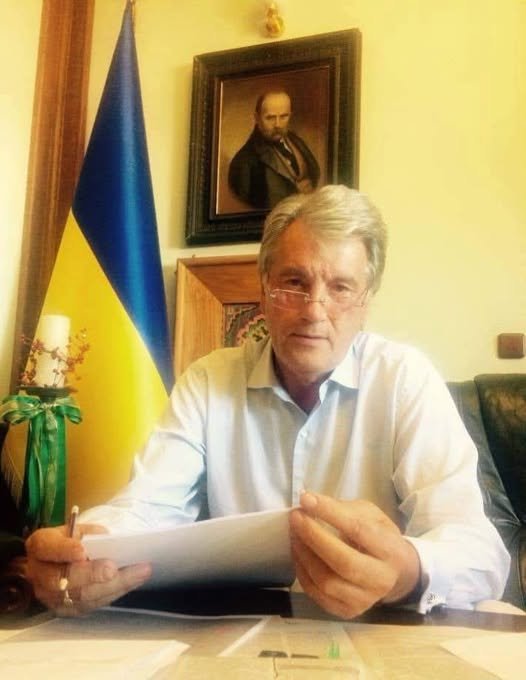
7234 2466 309790 482 242
X Freeze @XFreeze 2026-10-14T14:16:15.000Z

SpaceX uses ARGON ION PROPULSION to move Starlink satellites through space And the engineering is pretty wild Starlink satellites use argon Hall-effect thrusters electric engines that ionize argon gas and accelerate the charged particles at extremely high speed They allow Starlink satellites to: • Raise themselves into operational orbit • Maneuver around other spacecraft and debris • Maintain their position in space • Deorbit themselves at the end of their life SpaceX originally used krypton, but switched its next-generation Starlink satellites to argon The V2 Mini argon thruster produces: • 170 mN of thrust • 2.4X the thrust of the first-generation system • 1.5X the specific impulse And Starlink became the first spacecraft system to fly using argon propulsion in space A Falcon 9 gets Starlink into space Then these tiny electric engines keep thousands of satellites exactly where they need to be

2699 384 300420 173 32
@Albatrosswon reposted
Archaeo - Histories @archeohistories 2026-10-01T07:37:09.000Z

The iconic National Geographic photograph captures a line of camels walking across golden Sahara sand, their elongated shadows stretching dramatically in the late afternoon sun... The camel caravans which crossed the great dunes of the Sahara desert began in antiquity but reached their golden period from 9th Century CE onwards. In their heyday caravans consisted of thousands of camels travelling from North Africa, across the desert to the savannah region in the south and back again, in a hazardous journey that could take several months. Stopping along the way at vital oases, the caravans were largely controlled by the Berbers who acted as middlemen in the exchange of such desired commodities as salt, gold, copper, hides, horses, slaves, and luxury goods. The trans-Saharan trade brought with it ideas in art, architecture and religion, transforming many aspects of daily life in the towns and cities of a hitherto isolated part of Africa. Long before the great trans-Saharan caravans of the medieval period, there was a more localised trade between nomadic desert peoples and the tribes of the savannah region south of the Sahara, often called the Sudan region. Rock salt from the Sahara itself, which was badly needed in the salt-impoverished savannah, was exchanged for cereals (e.g. rice, sorghum, and millet), which could not be grown in the desert. Greek historian Herodotus, writing in 5th Century BC (Histories, Bk 4. 181-5), noted a camel caravan route which went from Thebes in Egypt to Niger (although Memphis  is more likely to have been the starting point). Roman writer Pliny the Elder  (23-79 CE) noted in his Natural History (5.35-8) that the caravans were managed by the Garamantes, probably ancient Berbers, who lived south of Libya. The Garamantes, in control of the date-palmed oases at Fezzan, acted as middlemen between the peoples of North Africa and sub-Saharan Africa. This arrangement would continue throughout the history of trans-Saharan commerce because those who controlled the desert, who knew the secrets of meeting its formidable challenges, also controlled the trade. Roman Tripolitania (modern Libya) was supplied with gold, ivory, ebony, cedarwood, and exotic beasts destined for the circuses, while olive oil and luxury goods like fine ceramics, glassware, and cloth were sent south in the exchange. Further east, there were also camel caravans linking Darfur in northwest Sudan to Assiut on Nile at least from 1st Century CE. Known as the Darb al-Arbein ('Road of 40 Days') it brought ivory and elephants from Africa's interior and thrived into Late Antiquity. Salt was the major commodity going south which was exchanged for gold, ivory, hides, and slaves (acquired from African tribes conquered by the sub-Saharan empires). Goods were gathered up from across the entire West African region and channelled along the Niger and Senegal Rivers to trading 'ports' like Timbuktu. As the Sudan region saw new and richer empires rise like the Mali Empire (1240-1645 CE) and Songhai Empire, so a wealthy elite sought evermore exotic and expensive goods from North Africa and the wider Mediterranean. Besides salt, caravans transported southwards glazed pottery (luxury vases, cups, oil lamps, and incense burners), precious and semi-precious stones (especially garnet and amazonite), cowrie shells and copper wire to be used as currencies, copper ingots, horses, manufactured goods, fine cloth, beads, coral, dates, raisins, and glassware (cups, goblets, and perfume bottles). As Sudan empires spread their influence and new powers rose such as  Hausaland, so this brought in new goods to the trans-Saharan trade like kola nuts (a mild stimulant), ostrich feathers, perfumes, and tobacco. #archaeohistories

326 43 21237 10 2