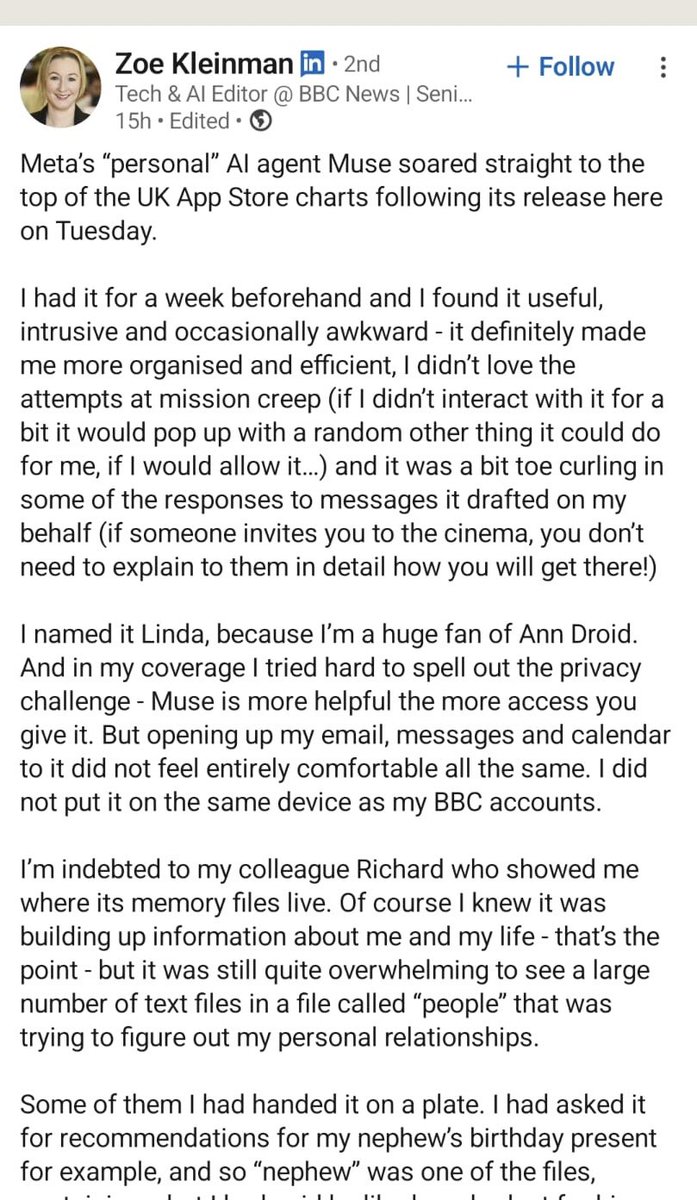
The BBC’s Technology and AI Editor blocked me on LinkedIn after I shared technical information about the privacy and security risks of Meta’s Muse AI agent. And my comments are also no longer visible to readers.
I only commented because one of my readers tagged me in her post, which I appreciate. Readers often tag me or send links privately because they want my perspective, which can add technical context or a different view. I also hear from whistleblowers who share information or thank me for my work. My comments were respectful and intended to help both the BBC and its readers understand important risks that weren’t addressed in its reporting.
When relevant technical comments disappear and the person who contributed them is blocked, that’s censorship, and it’s a terrible look for the BBC.
The BBC has a responsibility to provide impartial journalism and should be open to constructive criticism from its audience. That means giving people the information they need to understand the benefits and risks of new technology, and allowing them to question reporting that leaves out important facts.
This is especially important when companies like Meta have a long history of privacy and security failures. The BBC must also hold governments accountable when they propose compulsory identity verification under the pretext of child safety or pressure social media companies to change their algorithms to prioritise so-called trusted sources like the BBC itself. Journalists should question who benefits and how these policies affect freedom of speech, privacy and civil liberties.
Muse gives AI access to private communications, shopping accounts, calendars and other services. Serious security failures have already been documented, including cases where Muse accessed private Signal messages - without consent.
When BBC coverage focuses on Meta’s product announcements and commercial partnerships without explaining those risks, audiences receive an incomplete picture that benefits the company.
The loss of comments that provide missing technical context and links to articles so people can find more information makes the problem worse because readers lose access to information that could help them make better-informed decisions.
If BBC journalists block people who offer constructive criticism and their comments disappear, the BBC risks creating an environment where audiences can hear what government officials and tech leaders want them to hear but can’t question the reporting or contribute information that exposes what was left out.
I’ve been interviewed on BBC Newsnight and know several BBC journalists, so I’m familiar with the quality of journalism that they can produce. I don’t know this editor personally, but that shouldn’t matter. Technical information should be judged on its accuracy, not who provides it.
Her only response before she blocked me was “that’s not how end-to-end encryption works”, without explaining what she thought I’d got wrong or addressing the technical evidence I’d provided.
A publicly funded broadcaster should welcome evidence that improves its reporting and criticism from its audience. Otherwise, the BBC will become a mouthpiece for government and corporate announcements while it shuts out anyone who questions its reporting.
I’d encourage anyone at the BBC who follows my work to ask her to reconsider her approach. I’m happy to have a call to discuss the technical issues and move past this.
The BBC should set an example for impartial reporting, transparency and accountability. Its audience should be free to question its journalism without being silenced.
@zsk
@BBC